


Why Hidden Red Flags Matter More Than Ever in 2026
The rental fraud landscape has transformed dramatically. According to the National Multifamily Housing Council (NMHC), 70.7% of property managers experienced increased fraudulent applications in the past year. Even more alarming, Snappt’s analysis of nearly 5 million documents found that 6.4% of all rental applications contained fraudulent elements—with some markets, such as Memphis (14.4%), Mobile (13.5%), and Atlanta (12.2%), showing dramatically higher fraud rates.
The Fraud Epidemic:
84.3% of landlords saw falsified pay stubs, employment references, or income documentation
80.0% observed applicants misrepresenting information on applications
70.0% reported identity theft or fraudulent ID documents
67.1% experienced unauthorized cohabitants or illegal subletting
The Cost of Missing Warning Signs:
Average eviction: $3,500–$10,000 total cost
Lost rent during eviction: $2,540 average (2–3 month process)
Property turnover: $1,750–$4,000 per vacancy
Property damage: $200–$5,000+, depending on severity
The math is simple: $35 screening versus $3,500+ in eviction—a 100:1 cost-benefit ratio that makes prevention the smartest investment.
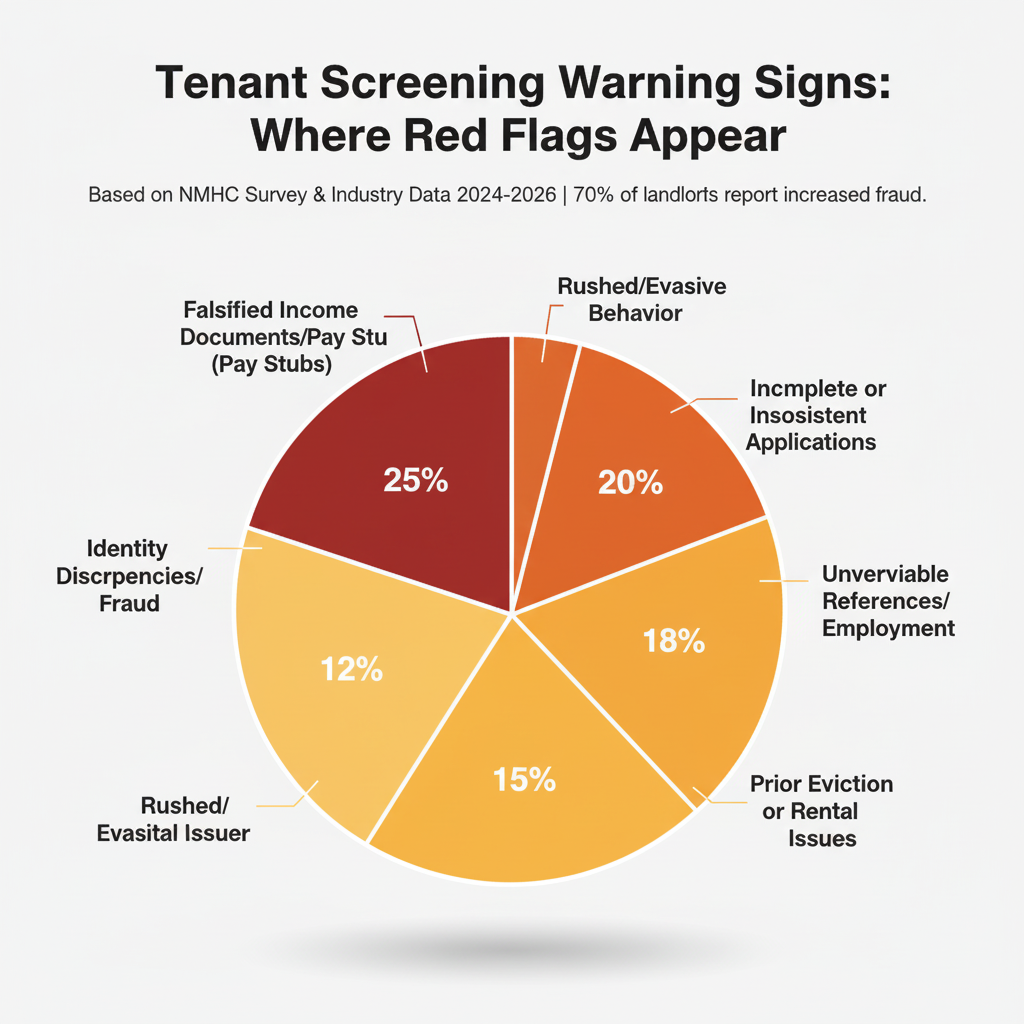
The Foundation: Credit, Criminal, and Eviction Reports
Before exploring hidden warning signs, ensure you’re running comprehensive baseline screening through SmartScreen.
Criminal Background Verification
A criminal background check helps identify applicants who could harm your property, other tenants, or the neighborhood. Not every record is a deal-breaker, but violent felonies, theft, fraud, or property-related crimes warrant serious consideration.
SmartScreen’s Criminal Check:
Searches nearly 370 million federal and state-level criminal records to provide comprehensive results in minutes, helping you make confident leasing decisions while following HUD’s Fair Housing guidance on individualized assessments.
Beyond Traditional Credit Checks
Most landlords understand credit scores, but generic scores aren’t optimized for predicting rental risk.
SmartScreen’s ResidentScore®:
TransUnion’s rental-specific score predicts eviction risk 15–16% better than traditional credit scores by analyzing factors most relevant to rental outcomes: payment patterns, rental collections, and housing-related behaviors.
ResidentScore predicts:
Eviction likelihood
3+ late payments
Insufficient funds
A low ResidentScore indicates a higher risk of missed or late rent payments—information that a generic credit score may miss.
Eviction History Search
Eviction reports reveal prior rental failures that strongly predict future problems. Research shows that applicants with prior evictions are 3x more likely to have additional eviction-related events and rental collections than non-evicted residents.
Because eviction history is one of the strongest predictors of future rental performance, this check is essential for protecting your investment.
12 Hidden Renter Warning Signs That Landlords Often Miss
Beyond standard reports, these behavioral and application red flags often signal the riskiest applicants—yet they’re surprisingly easy to overlook.
Warning Sign #1: Asking to Skip Tenant Screening
Red Flag Level: Critical
Any applicant who insists you don’t need formal screening should immediately raise suspicion. These applicants often:
Claim urgency (“I need to move this weekend”)
Use emotional pressure or sob stories
Offer extra money upfront to bypass verification
Suggest that screening is “unnecessary” for someone like them
Why It Matters:
Responsible tenants expect professional screening and have nothing to hide. Applicants avoiding scrutiny often have exactly what they’re trying to conceal—evictions, criminal records, or financial problems that would disqualify them.
Action: Never skip comprehensive screening regardless of pressure. A vacancy costs money, but an eviction costs 10–20x more. Always run a thorough tenant credit report, criminal history check, and eviction check before any leasing decision.
Warning Sign #2: Offering Their Own Credit Report
Red Flag Level: High
An applicant who wants to provide their own credit report may seem thoughtful—perhaps they recently obtained one for a loan and want to save you both time.
Why It’s Dangerous:
The information may be outdated, selectively edited, or completely fabricated. With modern editing tools and AI, creating convincing fake documents has become disturbingly easy.
Fraud Methods Detected in 2024:
Fraudulent PDF creators: Specialized software generating fake documents
Text insertion: Editing existing documents to falsify income or employment
Font manipulation: Mismatched fonts leave subtle forgery signs
Action: Always obtain reports directly from an FCRA-compliant provider, such as SmartScreen. Remind applicants that rental screening uses “soft inquiries” that don’t impact their credit scores.
Warning Sign #3: Frequent Moves Without Clear Explanation
Red Flag Level: Moderate to High
Does your applicant have a history of moving every 6–12 months? While some legitimate reasons exist (job relocations, military service), frequent moves often indicate problems.
Concerning Patterns:
4+ addresses in 3 years without clear professional reasons
Blaming every move on “bad landlords.”
Unable to provide contact information for previous landlords
Gaps in rental history that can’t be explained
Why It Matters:
Frequent movers may terminate your lease early, leaving you with vacancy costs. Worse, the pattern may indicate evictions, lease violations, or chronic conflicts with landlords.
Action: Request detailed explanations for each move. Contact all previous landlords to verify circumstances. If they blame every landlord, consider that the common factor in all these “bad” relationships is the applicant.
Warning Sign #4: Job Hopping or Unstable Employment
Red Flag Level: Moderate to High
Frequent job changes can indicate multiple concerns:
Income instability: May struggle to afford rent during transitions
Relocation risk: May need to break the lease for new employment
Reliability concerns: Pattern may extend to rental obligations
Warning Indicators:
Multiple jobs in the past 12 months without advancement
Unable to verify current employment
Income claims that don’t align with the stated job title
Reluctance to provide employer contact information
Why It Matters:
While career changes happen, 84.3% of landlords have encountered falsified employment references or income documentation. Verifying stable, legitimate employment is essential.
Action: Conduct direct employment verification through SmartScreen. Cross-reference with LinkedIn profiles. Require recent pay stubs and verify them independently—don’t just accept documents at face value.
Warning Sign #5: Long Gaps in Employment History
Red Flag Level: Moderate
Legitimate reasons exist for employment gaps—education, caregiving, health issues, and career transitions. However, unexplained gaps may indicate problems.
Questions to Ask:
What did you do during this period?
How did you support yourself financially?
Can you provide references from this time?
Concerning Responses:
Vague or evasive answers
Inability to explain how they paid rent during gaps
No references available from the period
Action: Request documentation for gaps (school transcripts, letters from former employers explaining layoffs). Verify that income was sufficient throughout and that rental payments were maintained.
Warning Sign #6: Excessive Urgency to Move In
Red Flag Level: High
An applicant desperate to sign immediately and move in within days should raise concerns.
Pressure Tactics to Watch:
“I can pay extra if you approve me today.”
“My current lease ends tomorrow.”
“I’ll lose my deposit if I don’t sign now.”
Creating artificial urgency or deadlines
Why It Matters:
Rushed decisions prevent proper screening. Fraudsters often pressure landlords to forgo verification, knowing that scrutiny would reveal disqualifying information.
Legitimate Urgency vs. Red Flags:
Legitimate: Job relocation with corporate documentation, documented family emergency, current lease ending (with proper notice given)
Suspicious: Can’t explain why they must move immediately, no documentation supporting urgency, becomes hostile when you request normal processing time
Action: Maintain your standard screening timeline regardless of pressure. Good tenants understand that proper processes take time.
Warning Sign #7: Incomplete or Inconsistent Application Information
Red Flag Level: High
Missing information on rental applications is one of the most obvious—yet most overlooked—red flags.
Common Red Flags:
Blank fields for previous landlord contacts
Vague addresses without apartment numbers
Employment information that can’t be verified
Social Security numbers that don’t match names
Conflicting dates or information across sections
Why It Matters:
Incomplete applications may indicate carelessness (concerning for property care), intentional concealment (hiding disqualifying information), or fraud (fabricated history).
Action: Require complete applications before processing. When information conflicts with screening results (for example, applicant claims no evictions but the report shows one), investigate thoroughly.
Warning Sign #8: Unverifiable or Suspicious
Red Flag Level: High
Reference verification is critical—67.1% of landlords have experienced unauthorized cohabitants or applicants evading proper verification.
Suspicious Reference Patterns:
“Landlord” answers personal cell phone casually
The reference can’t describe the property or lease terms
Phone number traces to the applicant’s friends or family
Reference is overly enthusiastic without specific details
Verification Techniques:
Cross-check landlord names against property ownership records
Use reverse phone lookups to verify reference identity
Ask specific questions only a real landlord would know (lease dates, rent amount, security deposit)
Contact references at published business numbers, not numbers provided by the applicant
Action: Independently verify all references. If a “landlord” can’t answer basic questions about the tenancy, they’re likely not legitimate.
Warning Sign #9: Reluctance About Security Deposit or First Month’s Rent
Red Flag Level: High
A reliable tenant should be financially prepared for move-in costs.
Warning Signs:
Requests to delay security deposit payment
Asks to pay the first month’s rent in installments
Unable to produce funds when the lease signing arrives
Offers post-dated checks
Why It Matters:
Financial struggles at move-in typically continue throughout tenancy. Tenants who can’t afford upfront costs often struggle to maintain consistent rent payments.
Action: Require full payment of the security deposit and the first month’s rent before providing keys. Never make exceptions—this protects both parties.
Warning Sign #10: Aggressive or Hostile Behavior
Red Flag Level: Critical
How applicants handle minor frustrations predicts future interactions.
Warning Behaviors:
Becoming angry over routine questions
Threatening or intimidating communication
Dismissive attitude about lease terms or policies
Excessive complaints about previous landlords, neighbors, or everyone they’ve dealt with
Why It Matters:
Applicants who are difficult during screening—when they’re trying to make a good impression—will likely be worse as tenants. Volatile behavior suggests potential conflicts, lease violations, or neighbor complaints.
Action: Trust your instincts. If someone makes you uncomfortable during screening, managing them as a tenant will be even more difficult.
Warning Sign #11: Discrepancies Between Application and Screening Results
Red Flag Level: Critical
When applicant claims don’t match verified data, you have a serious problem.
Common Discrepancies:
Claims no evictions, but the report shows filings
Stated income doesn’t match employment verification
Previous addresses don’t align with the credit report addresses
Employment dates conflict with documented history
Why It Matters:
Small omissions might be honest mistakes. But significant discrepancies—especially about evictions, income, or employment—indicate intentional deception.
Action: Address discrepancies directly with applicants. Provide opportunity to explain, but verify all explanations independently. Patterns of deception should disqualify applicants.
Warning Sign #12: Identity Red Flags and Document Inconsistencies
Red Flag Level: Critical
Identity fraud in rental applications has become increasingly sophisticated.
Warning Signs:
ID photo doesn’t clearly match the applicant
Social Security number linked to a different name in databases
Documents have mismatched fonts or obvious editing
Pay stubs with suspiciously round numbers (exactly $5,000 instead of $4,847.23)
Bank statements with uniform deposits not matching typical payroll patterns
Why It Matters:
70% of landlords have reported identity theft or fraudulent documents in applications. Approving a fraudulent application can lead to immediate non-payment, property damage, or worse.
Action: Use SmartScreen’s identity verification that validates Social Security numbers against government databases. Look for document red flags like missing security features, unusual formatting, or information that doesn’t match other verified data.
How SmartScreen Helps Detect Hidden Warning Signs
SmartScreen’s comprehensive screening goes beyond basic reports to help landlords identify both obvious and hidden red flags.
Comprehensive Verification Components
Credit Analysis with ResidentScore®:
TransUnion’s rental-specific score predicts eviction risk 15–16% better than generic credit scores, identifying financial patterns most relevant to rental performance.
Criminal Background Check:
Searches 370+ million records across federal and state databases, sex offender registries, and terrorist watchlists.
Eviction History Search:
Identifies prior evictions, unlawful detainer filings, and rental-related court judgments that predict 3x higher future default risk.
Employment Verification:
Confirms current employment, income, and job tenure directly with employers—preventing falsified employment claims.
Rental History Verification:
Contact previous landlords to verify payment history, property care, lease compliance, and willingness to rent again—detecting issues in 60–80% of concerning cases.
FCRA Compliance and Fair Housing Protection
SmartScreen’s workflows follow FTC guidelines for consumer reports, ensuring proper consent, adverse action notices, and documentation that protects landlords from compliance violations.
Fraud Detection Technology
AI-powered validation identifies document inconsistencies, verifies identity against government databases, and flags suspicious patterns that manual review often misses.
Best Practices for Spotting Warning Signs
1. Use Written, Consistent Screening Criteria
Document your screening standards (minimum credit scores, income requirements, acceptable criminal history) and apply them uniformly to all applicants. This protects against discrimination claims while ensuring objective evaluation.
2. Verify Everything Independently
Never rely solely on applicant-provided documents or references. Use SmartScreen’s verification tools and independently confirm:
Employment through HR departments (not numbers provided by applicant)
Previous landlords through property records
Income through multiple sources (pay stubs, tax returns, bank statements)
3. Trust Your Instincts—But Document Decisions
If something feels wrong, investigate further. However, always document specific, objective reasons for approval or denial to maintain Fair Housing compliance.
4. Never Skip Screening Under Pressure
Regardless of urgency, emotional appeals, or financial incentives, maintain your standard screening process. The $35–$75 screening cost prevents $3,500–$10,000 eviction losses—a 100:1 return on investment.
5. Stay Updated on Fraud Tactics
Critical Red Flags (Investigate Thoroughly):
❌ Asking to skip tenant screening
❌ Wanting to provide their own credit report
❌ Aggressive or hostile behavior during the application process
❌ Discrepancies between application claims and screening results
❌ Identity inconsistencies or document fraud indicators
High-Risk Warning Signs (Proceed with Caution):
⚠️ Excessive urgency to move in immediately
⚠️ Incomplete or inconsistent application information
⚠️ Unverifiable or suspicious references
⚠️ Unable to afford security deposit or first month’s rent
⚠️ Job hopping or unstable employment
Moderate Concerns (Require Explanation):
🔍 Frequent moves without clear professional reasons
🔍 Long gaps in employment history
🔍 Minor inconsistencies that may have legitimate explanations
Prevention ROI:
Screening cost: $35–$75
Eviction cost avoided: $3,500–$10,000
ROI: 100:1
FAQs: Renter Screening Warning Signs
What are the most common tenant screening red flags?
The most common red flags include: incomplete or inconsistent applications (80% of landlords report seeing misrepresented information), falsified income documentation (84.3% encounter fake pay stubs), unverifiable references, prior evictions (predicting 3x higher future default risk), requests to skip screening, excessive urgency to move in, and identity discrepancies. Rental application fraud increased 40% between 2023 and 2024, making vigilant screening more critical than ever.
Why would an applicant want to provide their own credit report?
While some applicants genuinely want to save time or avoid multiple inquiries, providing their own report is a major red flag because the document may be outdated, selectively edited, or completely fabricated. Modern fraud tools make creating convincing fake documents disturbingly easy. Always obtain reports directly from FCRA-compliant providers like SmartScreen, and remind applicants that rental screening uses “soft inquiries” that don’t affect credit scores.
How can I verify if a landlord reference is legitimate?
Verify landlord references by: (1) Cross-checking names against property ownership records through county tax assessor databases; (2) Using reverse phone lookups to confirm the number isn’t linked to the applicant; (3) Calling at published business numbers rather than applicant-provided contacts; (4) Asking specific questions only a real landlord would know (exact lease dates, rent amount, security deposit disposition). If a “landlord” can’t answer basic tenancy questions, they’re likely not legitimate.
What should I do if the application information doesn’t match the screening results?
Address discrepancies directly with applicants, providing an opportunity to explain. Small inconsistencies (minor date differences, address formatting) may be honest mistakes. However, significant discrepancies—especially about evictions, income, or employment—indicate intentional deception and should disqualify applicants. Document your findings and decisions for FCRA compliance.
How much does proper tenant screening cost compared to eviction?
Comprehensive screening costs $35–$75 per applicant, while evictions average $3,500–$10,000, including legal fees ($500–$5,000+), lost rent during a 2–3 month process ($2,540 average), and turnover costs ($1,750–$4,000). This represents a 100:1 cost-benefit ratio, making thorough screening the single best ROI in property management.
What are the signs of rental application fraud?
Signs of rental application fraud include: pay stubs with perfectly round numbers lacking realistic tax withholdings, bank statements with uniform deposits not matching payroll patterns, documents with mismatched fonts or obvious editing, references who can’t describe the property or lease terms, Social Security numbers that don’t match names in databases, and applicants who become hostile when asked verification questions. 6.4% of all rental applications contained fraudulent elements in 2024.
Conclusion
Recognizing renter screening warning signs requires looking beyond obvious red flags like poor credit or criminal records to identify subtle behavioral and application indicators that predict the highest-risk tenants—from asking to skip screening (suggesting concealed disqualifying information) and providing their own credit report (potentially falsified) to frequent unexplained moves (indicating chronic landlord conflicts), job hopping (signaling income instability), excessive urgency (preventing proper verification), and incomplete applications (intentional concealment or carelessness). With rental application fraud up 40%, 84.3% of landlords encountering falsified documents, and 6.4% of applications containing fraudulent elements, comprehensive SmartScreen tenant screening combining TransUnion ResidentScore® (predicting eviction 15–16% better than generic scores), criminal background searches across 370+ million records, eviction history identifying 3x higher default risk, employment verification preventing falsified claims, and rental history verification detecting issues in 60–80% of cases provides the multi-layered protection landlords need to identify both obvious and hidden warning signs. By maintaining consistent screening criteria, independently verifying all information, trusting your instincts while documenting objective reasons, and never skipping verification regardless of pressure, you invest $35–$75 to prevent $3,500–$10,000 eviction losses—a 100:1 ROI that makes thorough screening the single most valuable protection for your rental property investment.
Professional Resources: