
Tenant Screening: A Cost-Benefit Analysis
Compare the direct cost of screening with the financial risks a better rental decision can help reduce.
Tenant screening has a clear, measurable price. The potential benefit is broader: better information before move-in can help landlords evaluate credit, eviction history, criminal records where permitted, and income before committing to a lease.
What Does a Tenant Screening Cost-Benefit Analysis Measure?
A useful cost-benefit analysis starts with something simple: compare what you spend to screen applicants with the financial and operational risks you are trying to manage before a lease is signed.
The direct cost is easy to identify because a screening package has a stated price. The benefit is different for every property. It depends on rent, vacancy conditions, turnover costs, the landlord’s written screening criteria, and the type of information used to evaluate applicants.
That is why fixed claims such as “tenant screening always produces a specific ROI” can be misleading. Screening does not guarantee a particular tenant outcome. Its practical value is that it gives the landlord more relevant information before making a rental decision.
Better question: Instead of asking whether screening guarantees a return, ask whether the information provided is worth the report cost for the rental decision you need to make.
The Direct Cost of Tenant Screening
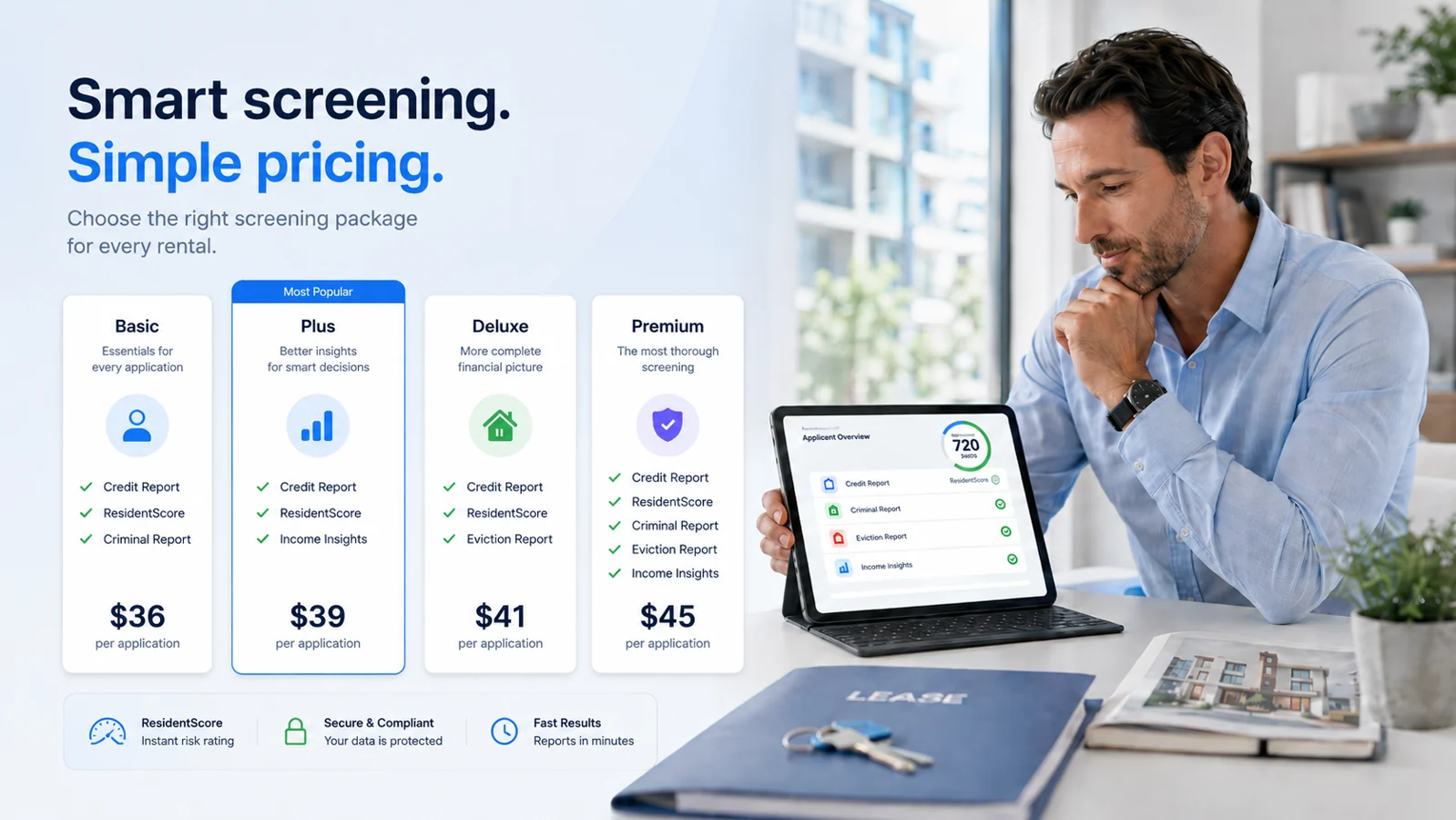
SmartScreen currently offers four screening packages. Registration has no set-up fee, and each package includes a tenant credit report with ResidentScore.
SmartScreen Basic
Credit Report + ResidentScore + Nationwide Criminal Report.
SmartScreen Plus
Credit Report + ResidentScore + Income Insights.
SmartScreen Deluxe
Credit Report + ResidentScore + Nationwide Eviction Report.
SmartScreen Premium
Credit Report + ResidentScore + Criminal + Eviction + Income Insights.
What Does the Screening Cost Buy You?
The value of screening comes from receiving information that would otherwise be missing, harder to obtain, or spread across different sources.
Credit + ResidentScore
Review reported credit history and a rental-focused score designed for tenant screening.
Criminal Report
Review available criminal-record information where screening is permitted by applicable law.
Eviction Report
Review available eviction-related records that may provide additional rental-history context.
Income Insights
Use income-related screening information to help evaluate whether stated income deserves additional verification.
Consistent Process
Use the same report types and written criteria for similarly situated applicants.
Online Access
Request and review reports online without an on-site inspection for the SmartScreen workflow.
What Costs Can Better Screening Help a Landlord Evaluate?
Screening cannot eliminate rental risk, but it can help a landlord evaluate risk before a lease creates a longer-term financial commitment.
- ✓ Nonpayment risk: credit and income information can add context before deciding whether the applicant meets written financial criteria.
- ✓ Turnover and vacancy: a failed tenancy can create additional vacancy, cleaning, repair, advertising, and leasing work.
- ✓ Eviction-related costs: eviction proceedings can involve filing costs, legal expenses, unpaid rent, time, and turnover.
- ✓ Administrative time: inconsistent or incomplete applicant review can create repeated follow-up and documentation work.
- ✓ Compliance risk: using consumer reports creates FCRA responsibilities, including adverse-action requirements when report information affects an unfavorable decision.
Important: Screening reduces uncertainty; it does not guarantee rent payment, prevent property damage, or ensure that an eviction will never occur.
Matching Screening Cost to the Information You Need
A cost-benefit analysis does not automatically mean buying the most expensive package. The better approach is to select the reports that match your written screening criteria and the risks you actually evaluate.
| Package | Current Price | Included Reports | Useful When Your Criteria Review |
|---|---|---|---|
| Basic | $36 | Credit, ResidentScore, Criminal | Credit history plus criminal background information. |
| Plus | $39 | Credit, ResidentScore, Income Insights | Credit history plus an income-related screening signal. |
| Deluxe | $41 | Credit, ResidentScore, Eviction | Credit history plus dedicated eviction screening. |
| Premium | $45 | Credit, ResidentScore, Criminal, Eviction, Income Insights | A broader review using all SmartScreen report types. |
Report availability can vary by jurisdiction, and criminal or eviction records may be limited by federal, state, or local law.
How the Renter-Pay Option Changes the Cost Side
SmartScreen supports both landlord-pay and renter-pay workflows where allowed by applicable law. With renter-pay screening, the applicant can pay the screening charge while the landlord receives the reports needed for review.
That can reduce the landlord’s direct report expense, but screening-fee laws differ by state and locality. Always check the rules for the property location before requiring an applicant to pay a screening fee.
Cost-benefit point: A renter-pay workflow may reduce the landlord’s direct screening expense, but the same written screening criteria and compliance obligations still matter.
How to Evaluate the Value for Your Own Rental
You do not need a universal industry ROI statistic to decide whether screening makes economic sense. Use your own property numbers and your own screening process.
- Start with the report cost. Identify which SmartScreen package matches your written criteria.
- Identify the risks you actually screen for. Examples may include credit performance, eviction history, criminal history where permitted, and income.
- List the costs of a failed placement for your property. Consider unpaid rent, vacancy, legal expense, repairs, cleaning, advertising, and administrative time.
- Separate guaranteed costs from potential benefits. The screening fee is known; avoided losses are possible, not guaranteed.
- Use the same method consistently. Do not change standards merely because one applicant appears more or less desirable.
Simple framework: If the information in the screening package can materially improve a rental decision whose downside is much larger than the report fee, screening may provide meaningful economic value even though no specific outcome is guaranteed.
Compliance Is Part of the Cost-Benefit Analysis
Tenant-screening reports are consumer reports under the Fair Credit Reporting Act. Landlords need a permissible purpose to obtain them, and consumer-report information must be used for the housing purpose for which it was obtained.
If information in a consumer report contributes to an unfavorable action — such as denying an application, requiring a co-signer, or imposing a higher deposit — an adverse-action notice is required under the FCRA.
Fair Housing requirements also apply. Written, objective criteria and consistent treatment of similarly situated applicants are important parts of a defensible screening process.
SmartScreen Reports and Sample Resources
Review the report types and sample reports before selecting the screening package that fits your process.
Screening Reports
Learn what each report adds to the applicant review.
Sample Reports
Preview example report layouts before ordering.
Frequently Asked Questions
Is tenant screening worth the cost?
It depends on the property and the screening criteria, but the direct report fee is small and predictable compared with many of the potential costs associated with a failed tenancy. Screening does not guarantee an outcome; it provides additional information before the lease decision.
How much does SmartScreen tenant screening cost?
SmartScreen currently lists four packages: Basic at $36, Plus at $39, Deluxe at $41, and Premium at $45 per application. Check the pricing page for current package details.
Which SmartScreen package provides the broadest screening?
The Premium package combines the Credit Report, ResidentScore, Nationwide Criminal Report, Nationwide Eviction Report, and Income Insights.
Can the renter pay the screening fee?
SmartScreen supports renter-pay screening where permitted by applicable law. Landlords should check state and local rules before requiring an applicant-paid screening fee.
Does screening guarantee a good tenant?
No. Screening provides information that can support a better-informed and more consistent decision, but no screening report can guarantee future payment, behavior, or lease performance.
Should cost be the only factor when choosing a screening package?
No. Choose reports based on the lawful written criteria you use to evaluate applicants and the information needed for that process.
Choose the screening level that fits your rental.
Compare SmartScreen packages and review the applicant information your written criteria require.