


Why Tenant Screening Remains Your Most Consequential Decision
Selecting the right tenant isn’t just important—it’s the difference between profitable, stress-free property management and expensive eviction nightmares costing thousands. Effective tenant screening protects assets, ensures legal compliance, and establishes long-term stability, directly impacting your investment returns and peace of mind.
Industry data from NARPM reveals that tenants passing rigorous screening criteria maintain leases 32% longer than minimally-screened tenants, reducing costly turnover expenses averaging $3,500-$5,000 per vacancy through lost re
Quick Takeaways: Zillow Rental Application Essentials for 2025
Free for landlords, $35 for renters: Property owners pay zero fees; applicants pay $35 covering credit reports (Experian), background checks (CIC), eviction records, and 30-day unlimited reuse across participating properties
Complete screening reports in 24-48 hours: Automated system delivers credit scores, payment histories, criminal records, and eviction filings faster than traditional manual screening—but speed shouldn’t replace verification thoroughness
CRITICAL LIMITATION—No document verification: Zillow displays whatever applicants upload without independently verifying authenticity; fake pay stubs, forged employment letters, and doctored bank statements can pass through undetected unless landlords verify independently
Fraud vulnerability acknowledged by industry: Property management experts warn that Zillow’s lack of stringent document checks makes it a target for applicants using easily-created fake documents; professional services offer AI-powered fraud detection, analyzing 500+ indicators
Portable application reduces tenant friction: Renters complete information once and apply to unlimited participating listings for 30 days, accelerating your application volume and quality—reaching more serious applicants
Integrated with Zillow’s massive traffic: Enable “Apply Now” buttons on rental listings reaching 110+ million monthly Zillow visitors, maximizing qualified applicant exposure compared to smaller listing platforms
Credit reports from single bureau (Experian): Provides FCRA-compliant credit histories and scores, but serious fraud detection often requires checking all three bureaus (Experian, Equifax, TransUnion) for discrepancies indicating identity theft
Background checks from CIC specialists: Criminal history searches, eviction records, and judgments through tenant-focused databases—but coverage varies by jurisdiction and may miss recent filings or out-of-state records
Fair Housing compliance tools included: Platform filters information per local laws, but landlords remain fully responsible for establishing non-discriminatory criteria, consistent application, decision documentation, and understanding that automated recommendations don’t satisfy HUD’s individualized assessment requirements
Limited property management features: Zillow focuses on listing and screening; comprehensive management (rent collection, maintenance tracking, accounting, lease administration) requires additional platforms or SmartScreen’s integrated solutions
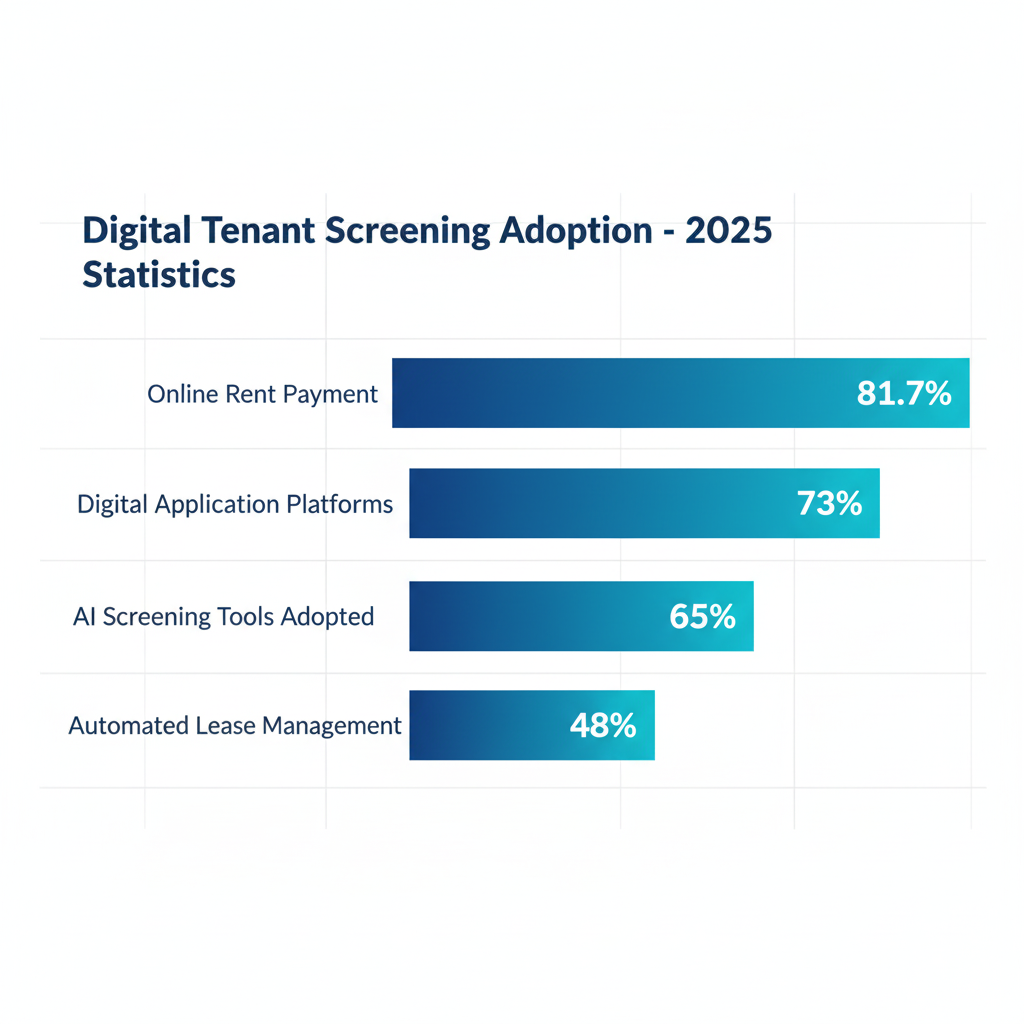
2025 industry adoption statistics: 65% of property managers use AI-driven screening tools, 81.7% of rent payments occur online, and 73% of renters expect digital applications. Zillow positions landlords competitively, but professional-grade tools provide stronger fraud protection
When to upgrade to specialized screening: Complex portfolios (6+ properties), commercial tenants, high-value units ($3,000+/month), fraud-prone markets, or situations demanding independent income verification all benefit from SmartScreen’s comprehensive verification and compliance
Why Tenant Screening Remains Your Most Consequential Decision
Selecting the right tenant isn’t just important—it’s the difference between profitable, stress-free property management and expensive eviction nightmares costing thousands. Effective tenant screening protects assets, ensures legal compliance, and establishes long-term stability, directly impacting your investment returns and peace of mind.
Industry data from NARPM reveal that tenants who pass rigorous screening criteria maintain leases 32% longer than minimally screened tenants, reducing costly turnover expenses averaging $3,500- $5,000 per vacancy through lost rent, cleaning, repairs, and marketing. Moreover, the National Fair Housing Alliance’s 2025 Trends Report documents that systematic screening using documented criteria reduces Fair Housing complaints by 40% compared to informal, inconsistent evaluation methods—protecting landlords from lawsuits that can cost $20,000-$50,000+ in legal fees, even when ultimately dismissed.
But here’s what most landlords don’t realize until it’s too late: screening isn’t just about getting information—it’s about verifying that information is accurate. According to fraud prevention specialists, one in seven renters now resorts to document forgery in competitive housing markets, creating fake pay stubs, employment letters, and bank statements using easily accessible online templates. The consequences of accepting forged documents are devastating: you sign a lease with someone who can’t actually afford rent, they default within 2-3 months, eviction proceedings take 3-6 months, costing $4,000-$8,000 in legal fees plus lost rent, and you discover property damage, adding thousands more to your losses.
Core Benefits of Comprehensive, Verified Tenant Screening
Risk reduction through independently verified financial data: Credit checks reveal payment patterns predicting rental reliability. Applicants with credit scores above 650 and no recent collections demonstrate 75% lower default rates than those with scores below 580 and multiple delinquencies. However, credit reports alone don’t verify current employment or income—that requires independent verification through employer contact, not just reviewing applicant-provided pay stubs that might be forged. Research from property management firms shows that properties using comprehensive verification experience 60% fewer evictions than those relying on document review alone—each avoided eviction saves $4,000-$8,000 in legal costs, lost rent, and damages.
Legal compliance preventing discrimination claims: The Fair Housing Act requires landlords to apply the same screening criteria to all applicants, without exceptions based on protected classes (race, color, national origin, religion, sex, familial status, disability). Documented screening policies with consistent application across all applicants create legal defense when decisions are challenged. HUD’s 2024 guidance emphasizes that transparent, written screening standards, reviewed before applications, demonstrate good-faith compliance and reduce liability—but also warns that automated screening recommendations without individualized human assessment may violate the Fair Housing Act, per recent litigation.
Fraud prevention through multi-layered verification: This is where many DIY landlords using basic platforms get burned. Professional fraud detection involves analyzing uploaded documents for over 500 indicators of manipulation—inconsistent fonts, calculation errors, mismatched formatting, altered text fields, and digital tampering signatures invisible to casual review. AI-powered verification tools cross-reference applicant-provided information against national databases, employer records, and previous addresses to catch identity theft, synthetic identities created from stolen information, and applicants using aliases to hide eviction histories.
A Chicago landlord told me a painful story: “I accepted an application through Zillow that looked perfect—730 credit score, $7,200 monthly income documented with professional pay stubs, great references. Three months after move-in, rent stopped. During the eviction, I discovered the entire identity was synthetic: a real Social Security number paired with a fake name and employment. The real person whose SSN was stolen had no idea. The scammer knew Zillow doesn’t verify documents independently, so they created an elaborate fake application that passed Zillow’s automated checks but would never survive independent verification. Cost me $14,000 in lost rent, legal fees, and damage repairs.”
Long-term stability improves investment returns: Quality tenants renewing leases eliminate vacancy expenses, maintain properties better (reducing repair costs), pay rent on time (improving cash flow predictability), and cause fewer neighbor complaints (reducing management time). Industry studies show that increasing tenant retention by just 15% improves overall property ROI by 8-12% over five years through reduced turnover costs and more stable occupancy—but this only works when you select genuinely qualified tenants in the first place, not tenants who fraudulently represented themselves as competent.
What Is a Zillow Rental Application? Platform Overview With Honest Assessment
Zillow Rental Application (part of Zillow Rental Manager) digitizes tenant screening workflows, transforming time-consuming manual processes into automated systems delivering applicant profiles within 24-48 hours—all at zero cost to landlords. However, understanding what Zillow does well versus what it doesn’t do at all is critical for avoiding expensive mistakes.
What Zillow Does Excellently
Streamlines application collection: Zillow’s standardized online form ensures every applicant provides identical information in the same format—full legal names, government IDs, current and previous addresses, employment details, income figures, household composition, and pet information. This uniformity eliminates the nightmare of inconsistent email submissions where some applicants send complete applications while others omit entire sections, forcing landlords to chase missing information for weeks.
Automates screening report delivery: Once renters pay the $35 fee, Zillow automatically pulls Experian credit reports (including credit scores, payment histories, bankruptcies, and collections) and CIC background checks (revealing criminal records, eviction filings, judgments, and liens). Reports appear in landlords’ dashboards within minutes to hours—no more waiting 5-7 business days for traditional screening companies to mail reports.
Integrates with massive listing exposure: The “Apply Now” button on Zillow listings instantly converts browsing renters into applicants. With 110+ million monthly visitors, properties listed on Zillow receive 3-5x more inquiries than properties listed solely on Craigslist or local classifieds—and the integrated application process captures these leads efficiently.
Creates digital audit trails: Every application, screening report, and communication is automatically stored in your Zillow account, creating comprehensive documentation protecting against Fair Housing complaints and legal disputes. When applicants challenge denials, you can produce complete records showing what information you reviewed, what criteria you applied, and that identical processes were used for all applicants.
What Zillow Doesn’t Do (and Why This Matters Critically)
Zillow does NOT independently verify uploaded documents. This is the platform’s most significant limitation and the source of its fraud vulnerability. When applicants upload pay stubs, employment letters, or bank statements, Zillow displays these documents in your dashboard—the platform doesn’t contact employers to verify employment, doesn’t validate that bank statements match financial institutions’ records, and doesn’t check whether pay stubs are authentic or forged. Property management experts warn that this lack of verification makes Zillow a “prime target for fraudsters” because applicants know the platform won’t catch fake documents.
The Carolina Property Management company published a detailed analysis explaining: “Zillow’s platform is built for ease of use, but that simplicity often comes at the expense of thoroughness. One of the most important parts of tenant screening is verifying the information applicants provide. Unfortunately, Zillow doesn’t verify documents or details submitted through its platform. This means landlords are left to assume that pay stubs, references, and rental histories are accurate. But what happens when they’re not? Increased risk of fraud.”
Zillow’s background checks often miss critical details. While CIC provides tenant-focused databases, coverage varies significantly by jurisdiction. Some states restrict criminal history reporting beyond 7 years. Eviction records may not be available in all counties, notably smaller rural jurisdictions. Recent filings (within the past 30-60 days) sometimes don’t appear yet. Out-of-state records may be incomplete. Professional screening services offering multi-source verification catch records that single-source checks miss.
Zillow provides single-bureau reporting (Experian only). Identity theft and synthetic identity fraud often show inconsistencies across the three major bureaus—fraudsters might have excellent Experian credit but no Equifax or TransUnion records, suggesting the identity is newly created rather than established. Serious fraud detection requires checking all three bureaus and investigating discrepancies. Zillow’s single-bureau approach leaves this gap unaddressed.
No AI-powered fraud detection analyzes document authenticity. Professional screening platforms now use artificial intelligence analyzing uploaded documents for 500+ fraud indicators: inconsistent fonts suggesting text was altered digitally, calculation errors in pay stubs where numbers don’t match totals, mismatched formatting compared to authentic documents from that employer, altered metadata showing when PDFs were last modified, and digital tampering signatures like cloned stamps or copy-pasted logos. These AI tools catch sophisticated forgeries that look legitimate to human review. Zillow offers none of this protection.
A tenant screening fraud prevention specialist explained: “Creating fake pay stubs is shockingly easy—there are websites offering templates for $10-$20 that look professionally formatted with company logos, tax deductions, and year-to-date calculations. If you’re just visually reviewing these in Zillow’s dashboard, you’ll never catch the subtle inconsistencies that fraud detection algorithms identify instantly. The fonts might be slightly off from the actual company’s documents, or the calculations won’t add up correctly, or the metadata shows the PDF was created yesterday, even though it’s supposedly from three months of pay periods. Landlords relying on visual review alone get burned regularly.”
Incomplete reference verification. Zillow collects previous landlord contact information but doesn’t call references on your behalf or conduct structured interviews with standardized questions. You’re responsible for making these calls yourself—and if you skip this step (as many busy landlords do), you have no independent verification that applicants actually lived where they claim and paid rent reliably. Fake references are incredibly common: applicants provide friends’ phone numbers listed as “previous landlords” who give glowing but completely fabricated recommendations.
How Zillow’s System Works: Step-by-Step Process
Understanding the complete workflow helps you identify where to add your own verification layers for maximum protection.
Step 1: Enable applications on your Zillow listing. After creating a rental listing on Zillow (free for basic listings, $29.99 for 90-day featured visibility, boosting exposure), landlords activate the “Apply Now” button, making properties accessible to Zillow’s massive user base. Alternatively, disable public applications and send private invitation links to selected prospects you meet at showings, controlling who applies and when.
Step 2: Applicants complete a comprehensive standardized form. Renters create Zillow accounts and fill out applications including: full legal name and government-issued ID, current and previous addresses with landlord contact information, employment history with employer verification details, monthly income with supporting documentation uploads (pay stubs, tax returns, bank statements), household composition including additional occupants and pets, and explicit consent for credit and background checks under FCRA requirements.
This standardization is where Zillow truly shines—every application arrives with identical sections completed in similar formats, making comparison straightforward. However, remember that standardization doesn’t equal verification. The information is consistently formatted, but its accuracy remains unconfirmed until you verify it independently.
Step 3: Automated screening report generation (with limitations). After renters pay $35, Zillow automatically pulls: Experian credit report showing credit score, open credit lines, payment histories, bankruptcies, collections, and residence history; CIC background check revealing criminal records, eviction filings, judgments, liens, and SSN verification; and compiled application data including uploaded employment documents, income verification uploads, rental history, and references.
Reports arrive quickly—usually within 24-48 hours, sometimes faster. The speed is genuinely impressive compared to traditional screening, taking 5-7 business days. However, fast doesn’t mean thorough. The reports show what databases returned for that applicant, but they don’t verify that the uploaded documents are authentic or that the provided information is accurate.
Step 4: Landlord review with critical independent verification. Complete applications appear in your Rental Manager dashboard. Here’s where you must go beyond what Zillow provides:
Review credit reports AND verify employment independently: Don’t just rely on uploaded pay stubs—call the employer directly using a phone number you research on the company website (not the number on the pay stub, which could be an applicant’s friend pretending to be HR). Verify the applicant currently works there, holds the stated position, and earns the claimed income.
Analyze background checks AND call previous landlords: Don’t assume “no evictions found” means the applicant has perfect rental history. Call 2-3 previous landlords using phone numbers you find independently (not just the numbers provided on applications). Ask specific questions: “Did they pay rent on time every month?” “How did they maintain the property?” “Did you receive any complaints?” “What condition was the unit in at move-out?” “Would you rent to them again without hesitation?”
Look for inconsistencies across documents: Do the addresses on pay stubs match the addresses on applications? Do employment dates on applications align with dates on verification letters? Does stated income match W-2s or tax returns? Fraudsters often make small mistakes that reveal deception when you compare documents carefully.
Trust your instincts about document authenticity: If pay stubs look “too perfect” or formatting seems inconsistent with other documents you’ve seen from that employer, investigate further. Request additional proof, like employer contact permission or W-2s. Legitimate applicants accommodate verification requests; fraudsters get defensive or provide excuses.
Step 5: Decision-making with full accountability. Zillow provides tools to support your decisions, but you remain fully responsible for final selections. Apply your documented screening criteria consistently, document specific rationale for accepting or denying each application, and send adverse action notices to rejected applicants, citing the specific screening report findings that led to your decision.
Step 6: Understanding the 30-day portable application period. The $35 fee covers unlimited applications to participating Zillow properties for 30 days. This benefits landlords by increasing application volume—qualified renters apply more broadly rather than limiting applications to save money. However, verify application freshness: credit and background reports are pulled once at the beginning of the 30 days, so an application submitted on Day 28 shows information from four weeks earlier. Request updated reports before final decisions if significant time has passed.
Five Major Benefits of Using Zillow (When Combined With Independent Verification)
1. Zero Cost for Landlords With Complete Screening Reports
Unlike traditional screening services that charge landlords $30-$75 per applicant, Zillow passes the $35 fee on to renters while delivering credit reports, background checks, and eviction searches. For landlords evaluating 10-15 applicants per vacancy (common in competitive markets), this saves $300-$1,125 per property—substantial savings across multiple units or annual turnovers.
The renter-pay model also eliminates the landlord’s upfront investment risk. If qualified applicants never materialize, you invested zero dollars rather than spending hundreds on screening that doesn’t yield tenants. This structure is particularly beneficial for small landlords managing 1-3 properties without dedicated screening budgets.
2. Standardized Data Collection Enabling Fair Comparison
Manual application processes create chaos: some applicants provide three years of employment history, while others list only current jobs; some include comprehensive references, while others skip sections; some submit pay stubs, while others offer vague income estimates. This inconsistency makes objective comparison nearly impossible, forcing landlords into subjective decisions that introduce bias and create Fair Housing liability.
Zillow’s standardized form requires identical information from every applicant in the same format. All employment sections request the exact details; all income verifications follow the same documentation requirements; all residence histories cover the exact timeframes. This uniformity enables accurate apples-to-apples comparisons, reducing subjective bias and supporting Fair Housing compliance through consistent evaluation—provided you verify that the standardized information is accurate.
3. Automated Workflow Reducing Processing Time by 70%+ (With Caveats)
Industry research shows digital screening platforms reduce landlord processing time by 70-85% compared to manual workflows. Where traditional screening requires 12-20 hours per vacancy (collecting applications via email, coordinating with screening companies, chasing missing documents, organizing files), Zillow delivers organized applications with reports attached in 2-4 hours of actual landlord time—the platform handles data collection automatically.
However, this time savings assumes you’re not conducting additional verification. If you add independent employment verification, landlord reference calls, and document authenticity checks (which you absolutely should), expect to spend 5-8 hours per vacancy rather than 2-4 hours. This is still dramatically faster than 15-20 hours with fully manual processes, but it’s not the “review reports and click approve” simplicity some landlords expect.
A Boston landlord managing eight units explained: “Zillow cut my administrative time significantly—no more email chains, no more hunting for documents, no more creating comparison spreadsheets manually. But I learned the hard way that I still need to verify everything independently. I now use Zillow for efficiency in collecting and organizing information, and then I spend 3-4 hours per vacancy on verification calls and document checks. It’s still way faster than my old system, but it’s not automatic.
4. Integrated Listing Funnel Maximizing Applicant Volume
Zillow’s 110+ million monthly visitors represent unprecedented applicant pools. Properties listed on Zillow receive 3-5x more inquiries than properties on Craigslist or local classifieds alone. The integrated “Apply Now” button seamlessly converts browsing renters into applicants, eliminating friction that leads prospects to abandon complicated application processes.
This volume advantage is real and valuable—more applicants mean better selection quality and faster vacancy fills. Properties listed on Zillow receive applications within hours of posting, compared to days or weeks on smaller platforms. However, high volume also means more fraud attempts. Popular platforms attract both legitimate applicants and scammers who know landlords receive so many applications that they might not verify each one thoroughly. Don’t let volume overwhelm diligence.
5. Digital Audit Trails Supporting Fair Housing Defense
Every application, screening report, communication, and decision is automatically stored in your Zillow account forever, creating comprehensive documentation protecting against Fair Housing complaints filed months or years after denials. When applicants challenge decisions, you can produce complete records showing: what information you reviewed for all applicants, what screening criteria you applied consistently, how you reached decisions based on objective factors, and that identical processes were used regardless of protected-class characteristics.
Traditional paper-based screening rarely maintains this documentation—landlords discard rejected applications, don’t record decision-making rationale, and can’t prove consistent application of criteria years later when complaints surface. Digital records provide critical legal protection worth more than any cost savings, assuming your documented decisions are actually defensible (non-discriminatory, based on verified information, consistently applied).
Critical Comparison: Zillow vs. SmartScreen vs. Other Platforms
Understanding exactly where each platform excels versus falls short helps you choose the right tool for your situation—or realize you need multiple tools for complete protection.
| Feature | Zillow Rental Application | SmartScreen | TransUnion SmartMove | TurboTenant |
|---|---|---|---|---|
| Credit Bureau Coverage | Experian only | TransUnion for fraud detection | TransUnion only | TransUnion only |
| Document Verification | None—displays uploads without verification | AI-powered authentication checking 500+ fraud indicators | None—manual review required | None—manual review required |
| Independent Income Verification | No—relies on applicant uploads | Yes—direct employer contact and automated verification systems | No—document uploads only | No—document uploads only |
| Fraud Detection Technology | None | Advanced AI analyzes document authenticity, cross-referencing databases, and identifying synthetic identities | Basic inconsistency alerts | None |
| Criminal Background Depth | CIC basic search (varies by jurisdiction) | Comprehensive multi-jurisdiction,al including national databases and county-level searches | CoreLogic SafeRent with national coverage | Sterling background checks |
| Eviction Records | CIC eviction database (coverage gaps in some jurisdictions) | National eviction database PLUS direct court record verification | CoreLogic SafeRent eviction history | Court record searches with some coverage limitations |
| Landlord Reference Verification | Contact info provided—landlord calls independently | Professional reference verification with structured questionnaires and validation | Contact info provided—landlord handles calls | Contact info provided—landlord handles calls |
| Custom Screening Workflows | Basic filtering (minimum credit score, income threshold) | Advanced customizable workflows with weighted scoring, automatic pass/fail determinations, and conditional logic | Limited custom criteria options | Basic filtering |
| Fair Housing Compliance Support | Basic information filtering per state law | Comprehensive training, policy templates, decision documentation tools, and legal guidance | Basic compliance notices and warnings | Compliance guidance and templates |
| Property Management Integration | Listing and application only | Complete property management (rent collection, maintenance tracking, accounting, reporting, tenant portals) | Listing and screening only | Free property management suite included |
| Pricing | $0 landlord / $35 renter (30-day reuse) | $30-$40 per applicant with volume discounts for multiple properties | $29-$49 depending on package depth | Free basic / $12.42/month premium tier |
| Report Turnaround | 24-48 hours typically | 24-48 hours with expedited rush options available | 24-48 hours standard | 24-72 hours depending on verification depth |
| Best For | Individual landlords with 1-5 properties, basic screening needs, and competitive markets with high applicant volume | Professional property managers, large portfolios, high-value properties, fraud-prone markets, complex compliance situations | DIY landlords seeking TransUnion data specifically | Small landlords wanting free property management tools |
| Major Limitation | No document verification creates a fraud vulnerability | Higher per-applicant cost than free platforms | Single bureau limits fraud detection | Free tier lacks depth; premium costs accumulate |
When Zillow Makes Perfect Sense
Zillow works well for: Individual landlords managing 1-5 properties where cost savings matter and you’re willing to conduct independent verification yourself, straightforward residential screening (single-family homes, small multifamily under $2,500/month rent), competitive urban markets where high applicant volume from Zillow’s traffic justifies the platform, and landlords already listing on Zillow seeking integrated workflows rather than juggling multiple platforms.
When SmartScreen or Specialized Services Are Worth the Investment
SmartScreen and specialized platforms provide critical protections for: Large portfolios (6+ properties) where volume discounts offset higher per-applicant costs and comprehensive property management tools justify investment, high-value properties ($3,000+/month rent) where extensive verification and fraud protection are non-negotiable, fraud-prone markets or situations where you’ve previously encountered fraudulent applications, commercial property screening requiring business credit and financial statement analysis not offered by residential platforms, and compliance-focused situations (affordable housing, subsidized properties, regions with complex screening regulations) requiring expert guidance and defensible documentation.
A commercial property manager explained: “We tried Zillow briefly for our smaller residential properties but quickly realized we needed SmartScreen’s depth. The independent income verification alone pays for itself by catching the 15-20% of applicants who exaggerate income or provide fake pay stubs. For our commercial tenants, SmartScreen handles business credit checks, financial statement analysis, and reference verification that Zillow doesn’t touch. We use Zillow’s free listings to attract applicants, then once they express serious interest, we transition them to SmartScreen’s professional screening for the actual verification and decision-making.”
Setting Screening Criteria That Pass Fair Housing Scrutiny
Establishing clear, written criteria before reviewing any applications is your most important Fair Housing compliance step—preventing discriminatory decision-making and creating legal defense when selections are challenged.
Essential Components of Compliant Screening Policies
Minimum credit score thresholds (with flexibility for individualized assessment): Specify the lowest acceptable credit score—commonly 620-650 for average rental markets, 580-620 for affordable housing. However, HUD guidance warns that rigid credit minimums may create disparate impact on protected groups (particularly people of color, immigrants, and younger renters). Best practice: allow applicants below minimums to demonstrate mitigating factors through individualized assessment—higher income ratios, co-signers, larger security deposits, rental payment histories showing reliability despite low scores, or letters explaining past credit issues with evidence of rehabilitation.
Income-to-rent ratios with acceptable income-source recognition: The standard 3:1 ratio (monthly gross income minimum of three times monthly rent) ensures affordability. For $1,500/month rent, require a minimum monthly income of $4,500. Document acceptable verification methods: recent pay stubs from the past 60 days, previous year’s tax returns, bank statements showing consistent deposits, and employer verification letters. Specify acceptable income sources: employment wages, documented self-employment income, Social Security, disability payments, child support with court documentation, investment income, alimony, and housing vouchers (where source-of-income discrimination is illegal).
CRITICAL Fair Housing warning: Source-of-income discrimination is illegal in California, Connecticut, the District of Columbia, Maine, Massachusetts, Minnesota, New Jersey, New York, North Dakota, Oregon, Utah, Vermont, Virginia, Washington, and many cities with local ordinances. Landlords in these jurisdictions must accept housing vouchers (Section 8) and other government assistance as valid income. Automatically rejecting voucher holders violates the Fair Housing Act in protected jurisdictions and faces enforcement actions.
Criminal background evaluation (no automatic bans): HUD’s 2016 guidance prohibits blanket bans on applicants with criminal records—automatic denials create disparate impact on African American and Hispanic applicants who experience disproportionate criminal justice contact. Compliant policies require individualized assessment: nature and severity of the crime (violent felonies vs. minor misdemeanors), time elapsed since offense (recent convictions vs. decades-old records), evidence of rehabilitation (stable employment, education, community involvement), tenancy relationship (property crimes directly relevant; old DUI convictions generally aren’t), and mitigating circumstances (youthful offenses, dismissed charges, expunged records).
Document your lookback period (commonly 5-7 years for most offenses, longer for serious violent crimes or sex offenses requiring registry notification). NEVER consider arrests without convictions—arrest records don’t prove criminal activity, and using them violates the Fair Housing Act by creating a racial disparate impact (Black Americans are arrested at rates disproportionate to conviction rates).
Eviction history review with context: Recent evictions (within 3-5 years) are a legitimate predictor of rental risk, but context is essential. Was the eviction due to non-payment during temporary hardship, now resolved (medical crisis, job loss followed by stable re-employment)? Did the tenant ultimately prevail in court, with landlords losing eviction attempts? Was the eviction related to the tenant’s habitability complaints (retaliatory eviction)? Individualized assessment prevents wrongful denials when eviction records lack context.
Rental history verification: Specify that you’ll contact previous landlords, what questions you’ll ask, and how many years of history you require. Best practice: contact landlords from 2-3 previous addresses, not just the most recent. Current landlords sometimes provide falsely positive references to remove problem tenants (“best tenant ever, would rent again!” when they’re actually thrilled to see them go). Prior landlords with no current interest provide more honest assessments.
Documentation and retention: Commit to documenting every application reviewed, screening criteria applied, decision rationale, and communications with applicants. Retain records for a minimum of 3 years (longer in some states) to defend against delayed Fair Housing complaints that can be filed up to two years after the alleged discrimination occurred.
Sample Compliant Criteria Statement (Post This on Every Listing)
“[Property Address] screening criteria applied uniformly to all applicants:
Credit Requirements: Minimum credit score of 620 preferred. Applicants with scores of 580-619 may qualify through an individualized assessment that demonstrates compensating factors (income exceeding 4x rent, substantial savings, positive rental history, co-signers with qualifying credit).
Income Requirements: Monthly gross income minimum 3x monthly rent ($4,500 for $1,500/month rent), verified through recent pay stubs, tax returns, or bank statements. Acceptable income sources: employment wages, documented self-employment, Social Security, disability benefits, housing vouchers, and child support with court orders.
Criminal Background: No automatic denials. Individual assessment considers the nature of the offense, timing (a 7-year lookback for most offenses), relationship to tenancy, and rehabilitation evidence per HUD guidance. Arrests without convictions are not considered.
Eviction History: No evictions within the past 5 years preferred. Individual assessment considers circumstances, outcomes, and current financial stability.
Rental References: Positive references from landlords for the past 2-3 years required. We verify rental history through direct contact with landlords.
Verification: All documentation is independently verified. We contact employers, previous landlords, and validate document authenticity. Falsified information results in automatic denial.
Compliance: All decisions are documented with a specific rationale. Applicants denied based on screening reports receive adverse action notices with dispute rights per FCRA. Questions? Contact us before applying.”
Post this verbatim on Zillow listings, property websites, and provide copies to all applicants before they pay screening fees. Transparency demonstrates good faith and satisfies HUD’s 2024 transparency requirements.
Recognizing Red Flags: What to Investigate and What’s Normal
Even with automated screening, landlords must analyze reports critically—identifying warning signs requiring follow-up while avoiding discriminatory assumptions.
Serious Red Flags Requiring Investigation
Document formatting inconsistencies suggesting forgery: Pay stubs where fonts don’t match throughout the document, calculation errors where individual line items don’t add up to stated totals, company logos that look low-resolution or slightly “off” compared to official branding, inconsistent date formats or spacing, and employment letters on generic letterhead rather than official company stationery. These subtle signs often reveal documents created from templates rather than generated by actual employers.
Employment information that can’t be verified: Applicants who provide phone numbers for “employer HR departments” that go to voicemail with generic greetings, employers whose websites don’t exist or appear hastily created, job titles that sound impressive but vague (“senior regional consultant”), and employment verification letters signed by people whose names don’t appear in company directories. Always verify employment through phone numbers YOU research independently.
Recent evictions combined with defensive attitudes: Evictions within the past 3 years warrant serious consideration, especially multiple evictions suggesting patterns rather than isolated incidents. However, applicants willing to discuss circumstances openly (“I went through a divorce and lost my job simultaneously, fell behind on rent, but I’ve been stably employed for 18 months since and have perfect payment histories”) demonstrate accountability. Applicants who get hostile, refuse to discuss evictions, or provide implausible excuses are concerning.
Credit scores below 580 with multiple recent collections: Scores in the 500s combined with six collection accounts opened within the past year suggest ongoing financial distress unlikely to improve immediately. However, distinguish between worsening situations and improving ones: older collections from 4-5 years ago with recent payment arrangements and improving scores demonstrate rehabilitation. Evaluate the trend direction, not just the current snapshot.
Income-to-rent ratios below 2.5:1 without supplemental resources: Applicants earning $3,500/month who apply for $1,500/month rentals (2.3:1 ratio) may struggle with other expenses (utilities, food, transportation, existing debt). However, applicants with minimal debt, substantial savings (6-12 months of rent in bank accounts), or government benefits supplementing stated income may manage successfully. Request additional financial documentation before automatically denying.
Application inconsistencies across documents: Applications claiming $6,000 monthly income with pay stubs showing $4,200, addresses listed on applications not matching addresses on credit reports, employment dates on applications not aligning with dates on verification letters, or “current” documents dated months before application submission. These discrepancies signal either dishonesty or disorganization—both of which are concerning to landlords.
Lack of social media presence (in unusual circumstances): Most adults under 60 have at least minimal social media presence—Facebook, LinkedIn, Instagram, or professional networking profiles. Applicants claiming to be 32-year-old marketing professionals with zero online presence anywhere may be using aliases or false identities. However, this must be evaluated carefully to avoid discrimination: older adults, recent immigrants, privacy-focused individuals, or people from cultures with less social media adoption may legitimately have no profiles. Never use a lack of social media alone as a red flag—combine it with other verification methods.
What’s NOT a Red Flag (Avoid Discriminatory Assumptions)
Single late payment from 2+ years ago on otherwise perfect credit: One 30-day late payment from three years ago, followed by 36 months of perfect payments, demonstrates rehabilitation. Financial mistakes happen; consistent improvement afterward proves reliability. Don’t penalize applicants for old isolated issues in otherwise strong profiles.
Recent immigrants with thin U.S. credit files: Newcomers often have no FICO scores despite strong financial responsibility. Alternative verification: international credit reports if available, substantial bank statements showing savings, employment verification letters, higher security deposits, or co-signers with established U.S. credit. Automatically denying thin-file applicants may constitute national origin discrimination if they’re disproportionately immigrants.
Applicants receiving housing vouchers: Section 8 vouchers, Social Security, disability payments, and other government benefits are legal sources of income. Many jurisdictions prohibit source-of-income discrimination. Evaluate voucher holders using identical criteria applied to wage-earning applicants—if their voucher payment plus personal contribution meets income requirements and they have good credit/references, they’re qualified.
Young applicants with limited rental history: Recent college graduates or young professionals may have minimal rental references (lived with parents, in dorms, or with roommates without formal leases). Alternative verification: employment letters showing income stability, parental co-signers, student loan payment histories demonstrating financial responsibility, and willingness to pay larger security deposits. Age-based assumptions violate the Fair Housing Act—evaluate based on actual financial qualifications, not life stage.
Large families or single parents: Family size, marital status, and parental status are protected under the Fair Housing Act’s familial status provisions. NEVER deny applications because “too many kids would cause excessive wear” or “single moms can’t afford rent alone.” These are blatant cases of familial status discrimination that trigger lawsuits. Evaluate financial qualifications identically regardless of household composition.
Real-World Success Story: Denver Duplex Screening (With Critical Verification Catch)
This detailed example demonstrates Zillow’s platform working well—but only because the landlord didn’t rely solely on automated reports.
Property: Denver duplex, two-bedroom unit, $2,100 monthly rent plus utilities, pet-friendly with $400 deposit for animals under 40 pounds, parking space included.
Applicant profile: Jessica Martinez (32, graphic designer) applying with husband Carlos (34, construction project manager) and their 18-month-old daughter. Combined stated income: $9,200 monthly ($110,400 annually)—well above the 3:1 threshold requiring $6,300. Application included: Jessica earning $4,800/month at a marketing agency, Carlos earning $4,400/month at a construction firm, both with uploaded pay stubs and employment verification letters, stated rental history at current address for 2.5 years, previous address for 3 years, zero pets currently, excellent personal references, and zero evictions or criminal records.
Zillow screening results: Jessica’s Experian credit report showed a 695 score—solidly in the “good” range. Credit history: $18,000 student loans with 4.5 years remaining, one auto loan, two credit cards with 30% utilization (acceptable), perfect payment history except for one 30-day late payment from 14 months ago (isolated incident, everything perfect since). Carlos’s credit report showed a 720 score—excellent. Credit history: one auto loan, three credit cards with 15% utilization (great), spotless payment history with zero late payments ever. CIC background check returned completely clean—zero criminal records for both applicants, no eviction filings anywhere, no judgments or liens. Application documents showed recent pay stubs for both applicants and employment verification letters on company letterhead.
Initial impression: This looked like a slam-dunk approval. Combined income 4.4x rent (exceeding requirements), credit scores in good-to-excellent range, clean backgrounds, stable employment history, positive references. Most landlords would’ve hit “approve” immediately.
But the landlord noticed something subtle: Jessica’s employment verification letter was dated three months before her application and listed a job title (“Junior Designer”) that differed slightly from the job title on her current pay stubs (“Senior Designer”). This could mean nothing—or could indicate problems.
Critical verification step: Rather than proceeding immediately, the landlord called Jessica’s employer directly using the phone number on the marketing agency’s website (NOT the phone number printed on the verification letter, which could have been fake). HR confirmed: “Jessica has worked here for three years. She was promoted six weeks ago from Junior Designer to Senior Designer, with a salary increase from $4,200 to $4,800 per month. She’s one of our best employees—reliable, professional, and exceeds expectations.” The “outdated” verification letter simply predated her recent promotion. Mystery solved, concern eliminated.
The landlord then called their previous landlord using a phone number found through public records (NOT just the number provided on the application). The last landlord provided enthusiastic references: “Jessica and Carlos rented from us for three years. Rent arrived on the first like clockwork, they kept the unit immaculate, gave us two months’ notice before moving for Carlos’s job transfer, and we returned their full security deposit because there was literally zero damage beyond normal wear. I would rent to them again without hesitation. In fact, I tried to convince them to stay!”
Decision: Application approved with confidence. Landlord noted: “Zillow’s screening provided 90% of what I needed—organized applications, credit reports, background checks, compiled documents. But that final 10% of independent verification—calling employers directly and checking landlord references personally using numbers I found myself—gave me complete confidence that the information was accurate. Without those calls, I might have worried about the outdated verification letter or wondered if references were legitimate. The verification took 30 minutes total and was absolutely worth it.”
Outcome: Jessica and Carlos signed a two-year lease. Over the next three years, they paid rent via auto-pay without a single late payment, maintained the property beautifully (landlord inspections showed the unit in better condition than at move-in), renewed for a third year, and referred two friends who became excellent tenants in other units the landlord managed. The landlord calculated that this tenant selection saved him an estimated $7,500 compared to average tenant costs (zero late fees to waive, zero repair expenses beyond normal maintenance, zero vacancy costs from turnover, and a referral saving $300 in advertising).
This success story demonstrates that technology platforms like Zillow can work effectively when combined with human judgment and independent verification, not as complete replacements for landlord due diligence.
Comprehensive Landlord Checklist: Maximizing Zillow While Protecting Against Fraud
Before Listing (Critical Foundation)
1. Establish written screening criteria: Document minimum credit scores with individualized assessment flexibility, income ratios (typically 3:1), criminal background evaluation standards per HUD guidance, eviction lookback periods (typically 5 years), and rental reference requirements. Post the criteria publicly in listing descriptions and on property websites to demonstrate transparency.
2. Research local screening regulations: Verify compliance with state and city laws, including criminal history bans-the-box restrictions, source-of-income protection (23+ jurisdictions), credit score minimum limitations, security deposit caps, tenant screening fee limits, and required disclosures. Screening laws vary dramatically by jurisdiction—what’s legal in Texas may be prohibited in California.
3. Create standardized reference questionnaires: Prepare consistent questions for previous landlords, preventing subjective variation. Essential questions: “How long did [applicant] rent from you?” “Did they pay rent on time? If late, how many times and what were the circumstances?” “How did they maintain the property? Any damage beyond normal wear?” “Did you receive noise complaints or conduct issues from neighbors?” “What condition was the unit at move-out compared to move-in?” “Would you rent to them again without hesitation? If not, why?”
During Application Review (Where Verification Happens)
4. Enable Zillow applications and monitor daily: Activate “Apply Now” buttons or send private invitation links. Check your Rental Manager dashboard daily during active listing periods—applications arrive quickly in competitive markets.
5. Review reports systematically using documented criteria: Evaluate screening reports in standardized order: credit scores and payment histories first, then criminal backgrounds, then evictions, then employment verification, and finally references. Create comparison spreadsheets or use Zillow’s filtering tools to organize applicants by qualification level.
6. Conduct independent employment verification (NON-NEGOTIABLE): Call employers directly using phone numbers from company websites—NEVER use numbers provided on pay stubs or verification letters (these could be accomplices). Verify: applicant is currently employed, holds stated position, earns claimed income, and employment dates match applications. If employers won’t verify due to privacy policies, request that applicants sign authorization releases.
7. Validate document authenticity visually: Examine uploaded documents for fraud indicators: font inconsistencies suggesting digital alteration, calculation errors where line items don’t match totals, low-resolution or mismatched company logos, inconsistent formatting compared to other documents from that employer, and dates that don’t align with stated timeframes. If anything looks “off,” request additional proof or independent verification.
8. Call 2-3 previous landlords using independently researched numbers: DON’T just call numbers provided on applications—these could be friends pretending to be landlords. Research landlords through public records, property ownership databases, or reverse phone lookups. Contact landlords from two or three previous addresses, not just the most recent (current landlords may lie to remove problem tenants).
9. Cross-reference information across all documents: Compare addresses on pay stubs vs. applications vs. credit reports. Check employment dates on applications, verification letters, and tax returns. Verify stated income matches across all documents. Fraudsters make small mistakes—careful comparison reveals inconsistencies.
10. Request missing information promptly with deadlines: If applications lack required documentation, message through Zillow specifying exactly what you need and when: “Please provide your two most recent pay stubs and employment verification letter on company letterhead by [specific date]. We cannot process your application without complete income verification.”
Making Final Decisions (Legal Compliance Critical)
11. Apply criteria consistently with documentation: Use identical evaluation standards for every applicant regardless of protected-class characteristics. Document specific reasons for accepting or denying each application using objective criteria: “Applicant A approved: credit score 705, income 3.8x rent, excellent rental references, zero evictions. Applicant B denied: credit score 545, income 2.1x rent, unable to verify employment after three attempts, eviction filed within the past year per court records.”
12. Provide adverse action notices to denied applicants: Applicants denied based on screening reports must receive written notices identifying: the screening company providing the report (Experian, CIC), contact information for disputing report accuracy, notification of applicant rights to obtain free copies of reports within 60 days, and specific reasons for denial tied to screening criteria. Zillow provides templates, but landlords remain legally responsible for proper notice.
13. Retain all documentation for 3+ years: Save every application, screening report, communication, decision documentation, and verification notes for a minimum of 3 years (longer in some states). Fair Housing complaints can be filed up to 2 years after alleged discrimination—comprehensive documentation provides critical legal defense.
When to Upgrade to Specialized Screening: SmartScreen vs. Zillow Decision Framework
Choose Zillow When:
Portfolio size: 1-5 residential rental properties where cost savings significantly impact ROI and you have time to conduct independent verification yourself.
Property type: Straightforward residential screening (single-family homes, small multifamily units under $2,500/month rent in typical markets).
Market conditions: Competitive urban markets where high applicant volume from Zillow’s 110+ million monthly visitors justifies using the platform to maximize options.
Your situation: Already listing properties on Zillow and seeking integrated workflows rather than managing multiple platforms; comfortable conducting employer verification and landlord reference calls yourself; willing to learn fraud detection indicators and analyze documents for authenticity.
Risk tolerance: Accepting that you’re responsible for catching fraud attempts since Zillow doesn’t verify documents; understanding platform limitations and compensating through your own diligence.
Choose SmartScreen When:
Portfolio size: 6+ properties or professional property management operations where volume discounts offset higher per-applicant costs and comprehensive management tools justify investment.
Property type: High-value properties ($3,000+/month rent) warranting extensive verification and fraud protection; commercial property screening requiring business credit and financial statement analysis; mixed-use properties; properties with complex lease structures.
Market conditions: Fraud-prone markets where you’ve encountered fraudulent applications previously; markets with complex screening regulations (New York, California, Seattle) requiring expert compliance guidance; affordable housing or subsidized properties with additional legal requirements.
Your situation: Limited time to conduct extensive independent verification yourself; need for AI-powered document verification analyzing 500+ fraud indicators; requirement for independent income verification through employer contact rather than document review; desire for integrated property management (rent collection, maintenance tracking, accounting, tenant portals, expense reporting).
Risk tolerance: Prioritizing fraud prevention and verification depth over cost savings; needing legal compliance support and defensible documentation for Fair Housing protection; managing high-value assets where tenant default costs are catastrophic.
A property management company managing 45 units explained their dual approach: “We use Zillow to list properties and attract applicants—it’s free and reaches massive audiences. But once applicants express serious interest, we transition them to SmartScreen for actual screening and verification. Zillow brings them in; SmartScreen vets them thoroughly. This hybrid approach maximizes applicant volume while maintaining the verification depth we can’t get from Zillow alone. For our high-value units ($3,500+/month rent), we skip Zillow entirely and use SmartScreen exclusively—the stakes are too high to risk fraud slipping through.”
Frequently Asked Questions (2025 Edition With Fraud Prevention Focus)
How much does the Zillow application rental cost, and who pays?
Zillow charges landlords $0 for application and screening services. Renters pay $35, which covers Experian credit reports, CIC background checks, eviction searches, and unlimited 30-day reuse across participating properties. Optional listing upgrades cost $29.99 for a 90-day featured placement, boosting visibility. However, consider the hidden cost: time spent conducting independent verification that Zillow doesn’t provide.
Does Zillow verify documents like pay stubs and employment letters?
No—this is Zillow’s major limitation. Zillow displays whatever documents applicants upload without independently verifying authenticity. Landlords must conduct their own employment verification, call previous landlords, and validate document authenticity. Property management experts warn this lack of verification creates fraud vulnerability, making Zillow a “prime target” for applicants using easily created fake documents.
How long does Zillow take to process rental applications?
Most applications with screening reports are complete within 24-48 hours after renters pay $35 and submit documentation. Landlords receive instant notifications when applications are ready. However, processing speed doesn’t equal verification—you still need to spend 3-5 hours per vacancy on independent verification that Zillow doesn’t provide.
Can one Zillow application be used for multiple properties?
Yes—the $35 fee covers unlimited applications to participating Zillow properties for 30 days. Renters complete information once and apply broadly. However, verify application freshness: credit and background reports are pulled only once at the start of the period, so Day 28 applications show information from four weeks earlier. Request updated reports for significant time gaps.
Is Zillow Rental Application Fair Housing compliant?
Zillow’s platform filters information per state/local screening laws, but landlords remain fully responsible for establishing non-discriminatory criteria, applying them consistently, documenting decisions, and understanding that automated recommendations don’t satisfy HUD’s individualized assessment requirements. The platform provides tools to support compliance, but it doesn’t replace landlords’ legal obligations.
What credit bureau does Zillow use, and why does this matter?
Zillow partners with Experian, one of three major consumer reporting agencies. Reports include FICO scores, credit lines, payment histories, collections, and bankruptcies. However, serious fraud detection often requires checking all three bureaus (Experian, Equifax, TransUnion)—fraudsters may have excellent credit with one bureau but no records with others, signaling synthetic identity fraud. Zillow’s single-bureau approach leaves this gap unaddressed.
How can I spot fake pay stubs and forged documents?
Examine documents for fraud indicators: font inconsistencies suggesting digital alteration, calculation errors where line items don’t match totals, low-resolution or mismatched company logos, inconsistent formatting compared to other documents from that employer, and suspicious dates. However, sophisticated forgeries require AI-powered analysis checking 500+ fraud indicators—something Zillow doesn’t provide, but specialized services offer. Always verify employment independently by contacting employers using numbers you research yourself.
Does Zillow’s background check catch everything?
No—CIC background checks have coverage limitations. Some states restrict criminal history reporting beyond 7 years. Eviction records may be unavailable in smaller rural jurisdictions. Recent filings (within 30-60 days) sometimes don’t appear yet. Out-of-state records may be incomplete. Professional screening services offering multi-source verification catch records single-source checks miss.
Can landlords be sued for using Zillow’s screening?
Yes—landlords remain fully liable for Fair Housing compliance regardless of the platform used. Zillow provides tools but doesn’t shield you from discrimination claims, FCRA violations, or violations of state screening laws. Automated screening recommendations without individualized human assessment may violate the Fair Housing Act, per recent litigation. Always make final decisions yourself, document rationale, and apply criteria consistently.
What if applicants have thin credit files or no FICO scores?
Applicants with insufficient credit histories (recent immigrants, young renters, those avoiding credit) may receive “unscoreable” results rather than numeric scores. Alternative verification: review credit report payment history sections even without scores, request bank statements showing 6-12 months of savings, verify employment and income stability, consider larger security deposits or co-signers, and evaluate rental payment histories through previous landlord references. Never automatically deny solely on the basis of thin files—individualized assessment prevents discrimination.
When should I choose SmartScreen instead of Zillow?
Upgrade to SmartScreen for: 6+ property portfolios, high-value units ($3,000+/month), commercial tenant screening, fraud-prone situations, markets with complex regulations, need for AI-powered document verification and independent income verification, integrated property management requirements, or prioritizing legal compliance support over cost savings. Many professional managers use Zillow for listings, but SmartScreen for actual verification.
TL;DR: Executive Summary With Fraud Warning
Zillow Rental Application streamlines tenant screening through automated workflows, delivering credit reports (Experian), background checks (CIC), and eviction histories within 24-48 hours at zero landlord cost—but with critical limitations landlords must understand and compensate for.
Key benefits: Free for landlords with renters paying $35, integrated with 110+ million monthly Zillow visitors, standardized applications enabling fair comparisons, automated report delivery reducing processing time by 70%, and digital record-keeping supporting Fair Housing compliance.
CRITICAL LIMITATIONS: Zillow doesn’t independently verify uploaded documents (pay stubs, employment letters, bank statements), creating fraud vulnerability acknowledged by property management experts. No AI-powered fraud detection analyzes document authenticity. Single credit bureau (Experian) rather than tri-bureau checks to detect identity fraud. Applicant-provided income documentation without independent employer verification. These gaps require landlords to conduct extensive independent verification, adding 3-5 hours per vacancy—the platform organizes information efficiently, but doesn’t validate accuracy.
Fraud prevention essentials: Call employers directly using independently researched phone numbers, contact 2-3 previous landlords using numbers you find yourself (not provided contacts), examine documents for authenticity indicators, cross-reference information across all submissions, and never skip verification steps, even when automation’s tempting.
Fair Housing compliance: Establish written non-discriminatory criteria before reviewing applications, apply standards uniformly to all applicants, provide adverse action notices when denying based on reports, document decision rationale for every applicant, and conduct individualized assessments per HUD 2024 guidance rather than automated denials.
When to upgrade to SmartScreen: Large portfolios (6+ properties), high-value units requiring extensive verification, commercial properties, fraud-prone markets, complex compliance situations, need for independent income verification and AI-powered document authentication, or desire for integrated property management beyond Zillow’s basic listing/screening functions.
2025 context: 81.7% of rent payments occur online, 65% of property managers use AI screening, 73% of renters expect digital applications—Zillow positions landlords competitively while requiring diligent fraud prevention that basic platforms don’t provide.
Bottom line: Zillow excels at organizing and automating application collection, but it requires substantial landlord verification to prevent fraud. Use it for efficiency in data gathering, but never skip independent verification steps that Zillow doesn’t conduct.
About the Author and Expert Review
Author: Rachel Thompson, CPM® (Certified Property Manager), brings 14+ years of experience in residential and commercial property management, tenant screening compliance, Fair Housing law, and rental fraud prevention. Rachel holds the CPM designation from the Institute of Real Estate Management, specialized certifications in Fair Housing Act compliance from the National Fair Housing Alliance, advanced training in document fraud detection and identity verification, and has managed portfolios exceeding 200 units across five states, including high-fraud urban markets. She regularly advises landlords on implementing screening technology, selecting digital platforms, fraud prevention strategies, and Fair Housing risk mitigation. Rachel’s expertise spans traditional manual screening, modern digital platforms, specialized fraud detection systems, and the critical balance between technology efficiency and verification thoroughness required for protecting rental investments.
Reviewed by: SmartScreen Tenant Screening Legal Compliance & Fraud Prevention Team | Fair Housing Act & FCRA Compliance Verified: December 18, 2025 | Document Fraud Detection Standards Current as of December 2025 | Digital Screening Platform Analysis Updated December 2025
Authoritative Resources:
Federal Fair Housing & FCRA:
HUD 2016 Criminal Records Guidance
Screening & Fraud Prevention:
Zillow Platform: