


Understanding Tenant Privacy in 2026 Screening
The Evolving Privacy Landscape
The tenant screening industry faces increased scrutiny in 2026, with privacy and data security concerns paramount as digital platforms handle sensitive personal information. Compliance with regulations such as FCRA, GDPR, and CCPA protects tenants’ personal data while ensuring landlords make informed decisions.
Critical Privacy Developments:
HUD’s 2025 screening guidelines emphasize individualized assessments over blanket policies
Seventeen states and six jurisdictions have policies sealing eviction records to protect tenant privacy
Philadelphia’s 2021 Renters’ Access Act requires landlords to provide rejected applicants with screening report copies and allow error correction within seven days
Future trends include robust security measures like encryption and multi-factor authentication
Research reveals that screening companies often provide inaccurate information to landlords, with data brokers scraping eviction information from court websites without verifying whether filings resulted in judgments against tenants.
What Makes SmartScreen Different
Advanced Privacy Protection Framework
SmartScreen distinguishes itself through comprehensive privacy safeguards that exceed industry standards. Unlike many screening services that rely on automated searches of online material through data brokers, SmartScreen implements rigorous verification procedures.
SmartScreen Privacy Advantages:
Customizable Screening Reports: Tailored depth and type of checks according to specific landlord needs
Integration with Trusted Platforms: Works seamlessly with TransUnion SmartMove for a complete tenant history
FCRA Compliance Automation: Built-in compliance features ensure legal adherence
Same-Day Reporting: Rapid processing without sacrificing thoroughness or accuracy
ResidentScore® Technology: Predicts eviction risk 15% more accurately than traditional credit scores
Why Tenant Privacy Matters in Screening
Financial and Legal Protection
Proper screening protects both landlords and tenants by ensuring sensitive information is handled securely. Professional screening reduces financial risks, prevents costly evictions, and enhances property safety while respecting privacy rights.
Screening Benefits:
Reduces Financial Risks: Ensures tenants have stable financial backgrounds, minimizing unpaid rent
Prevents Costly Evictions: Identifies tenants with non-payment histories or lease violations
Enhances Safety: Criminal background checks help select tenants who contribute to secure environments
Protects Privacy: Secure data handling prevents unauthorized access and identity theft
Risks of Inadequate Privacy Protection
Failing to protect tenant privacy during screening can result in severe consequences:
FCRA Violations: Fines and lawsuits for failure to obtain written consent or provide adverse action notices
Fair Housing Claims: Discrimination lawsuits from inconsistent screening practices
Data Breaches: Identity theft and fraud from insecure data handling
Reputational Damage: Loss of tenant trust and negative reviews affecting future rentals
FCRA Compliance and Legal Requirements
Essential FCRA Obligations for Landlords
The Fair Credit Reporting Act governs how landlords use consumer reporting agency data in tenant screening. Understanding these requirements is crucial for legal compliance and privacy protection.
FCRA Requirements:
Written Consent: Obtain explicit, written authorization before running any background checks
Separate Disclosure: Provide a clear disclosure on a separate document that the landlord may obtain reports for screening purposes
Adverse Action Notices: If denying applications based on screening results, provide a pre-adverse action notice and a final adverse action notice
Report Access: Inform denied applicants of their right to obtain free report copies and dispute inaccuracies
Secure Disposal: Properly dispose of consumer reports and gathered information when no longer needed
According to legal experts, landlords may mitigate FCRA liability by maintaining reasonable procedures that assure compliance during applicant screening.
HUD Guidelines and Fair Housing
HUD’s 2025 guidelines continue emphasizing individualized assessments, with blanket policies banning anyone with criminal records from violating fair housing laws. For comprehensive Fair Housing guidance, visit HUD’s official resources.
Compliant Criminal Screening Requires:
Individualized assessment of each applicant’s circumstances
Consideration of the offense nature, time elapsed, and evidence of rehabilitation
Non-conviction records (arrests, warrants, dismissals) are limited to seven years
Comprehensive SmartScreen Tenant Reports
What’s Included in SmartScreen Screening
SmartScreen offers detailed background checks that include multiple verification components:
Report Components:
Credit History: Financial reliability insights, including payment patterns and debt management
Criminal Records: Safety risk identification across federal, state, and local databases
Eviction History: Previous non-payment or lease violation patterns (limited to seven years under FCRA)
Employment & Income Verification: Rent affordability confirmation through automated systems
Rental History: Past landlord-tenant relationship insights
Reports typically return within 48 hours for properties using modern screening tools like SmartScreen.
How SmartScreen Ensures Privacy Protection
Multi-Layered Security Framework
SmartScreen maintains strict privacy standards through comprehensive security measures:
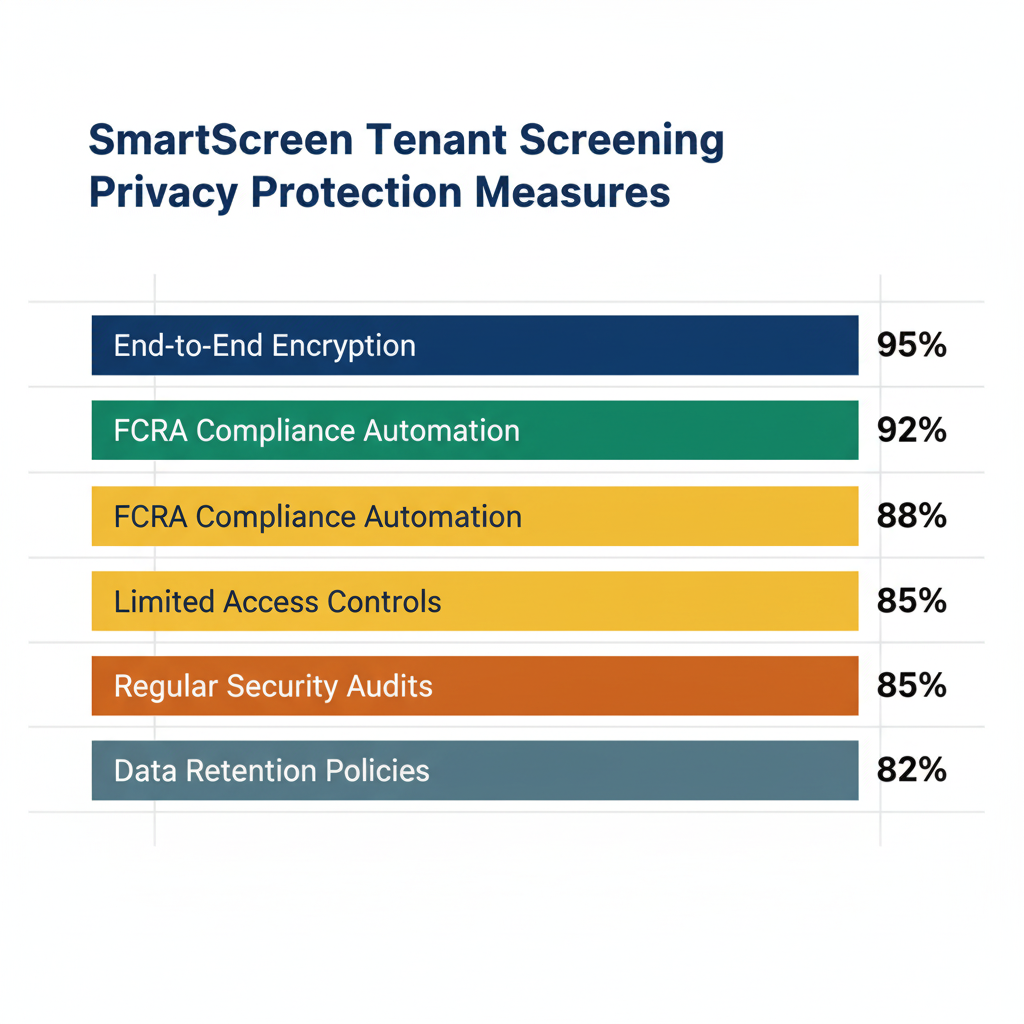
Privacy Protection Measures:
End-to-End Encryption: Protects tenant data from unauthorized access during transmission and storage
Limited Access Controls: Restricts data availability to authorized personnel only
Regular Security Audits: Continuously update systems to protect against vulnerabilities
Multi-Factor Authentication: Enhanced security for platform access
Compliant Data Retention: Follows FCRA requirements for secure disposal of consumer reports
Applicant-Initiated Screening Process
Modern best practices include applicant-initiated screening, where tenants start the screening process, helping protect their personal information and streamlining compliance with privacy laws. This approach ensures that tenants control who can access their credit and personal information.
Benefits of Applicant-Initiated Screening:
Tenants enter sensitive information directly into secure systems
Landlords don’t collect Social Security numbers or banking details
Automatic identity verification through third-party services
Consent and authorization are built into the application flow
Technology Solutions for Compliant Screening
Digital Platform Advantages
Modern property management technology significantly improves both the efficiency and compliance of tenant screening. Digital platforms provide standardized procedures, automated compliance features, and comprehensive documentation.
Technology Benefits:
Automated Compliance: Built-in FCRA disclosures, authorization collection, and adverse action notices
Secure Data Storage: Encrypted storage protecting sensitive personal information
Seamless Integration: Background checks and credit reports ordered through unified platforms
Instant Results: Reports returning within minutes in most cases
AI-Powered Fraud Detection: Document scanning for tampering and identity mismatches
Platforms like SmartScreen combine TransUnion-powered background checks with automated compliance features, ensuring comprehensive tenant screening while staying compliant with 2026 regulations.
Best Practices for Privacy-Focused Screening
Establishing Consistent Procedures
Screening criteria documentation protects landlords legally while ensuring consistency. Every applicant should experience identical screening procedures regardless of background.
Essential Documentation:
Written Screening Criteria: Clear qualification standards updated and compliant with current regulations
Application Procedures: Standardized forms ensuring complete documentation
Adverse Action Templates: Pre-prepared letters meeting FCRA requirements
Record Retention Policy: Fair housing records are maintained for at least two years
Training Programs: Regular staff education on compliance and privacy protection
Compliance Audit Checklist
Quarterly compliance audits ensure ongoing adherence to privacy and legal requirements:
Written screening criteria updated and compliant
All required notices and forms are current
Proper authorizations obtained before screening
Data security measures verified
Screening service compliance confirmed
Frequently Asked Questions
What is resident screening for tenant privacy?
Resident screening for tenant privacy combines comprehensive background checks with secure data handling, FCRA compliance, and privacy protection measures, ensuring landlords assess tenant reliability while respecting sensitive personal information.
Why is tenant privacy important in screening?
Protecting tenant privacy builds trust, ensures legal compliance with FCRA and Fair Housing laws, prevents data breaches and identity theft, and demonstrates professional property management standards.
What does SmartScreen’s screening process include?
SmartScreen provides comprehensive reports, including credit history, criminal background checks, eviction history (limited to seven years), employment verification, and rental references.
How does SmartScreen ensure privacy during screening?
SmartScreen implements end-to-end encryption, limited access controls, regular security audits, multi-factor authentication, FCRA-compliant data handling, and applicant-initiated screening processes protecting sensitive information.
Do landlords need tenant consent for screening?
Yes, FCRA requires landlords to obtain explicit written consent before obtaining any consumer reports, with disclosure provided in a separate document explaining the screening purposes.
What are FCRA requirements for adverse action notices?
Landlords must provide pre-adverse action notice, including a copy of the report and the time for tenant response, followed by a final adverse action notice that includes consumer reporting agency details and tenant rights information.
How long can screening companies report eviction records?
Under FCRA, screening companies can report evictions for up to 7 years, and many jurisdictions have enacted eviction-sealing laws limiting data-broker access to these records.
Conclusion:
Resident screening for tenant privacy requires balancing comprehensive background checks with robust data protection measures in 2026’s evolving regulatory environment. SmartScreen provides this balance through FCRA-compliant screening, end-to-end encryption, automated compliance features, and applicant-initiated processes that protect sensitive information while enabling informed landlord decisions. By implementing credit analysis, criminal background checks, eviction history verification, and rental reference checks with strict privacy safeguards, landlords can navigate HUD guidelines, Fair Housing requirements, and data security obligations while selecting reliable tenants.
Professional References: