


Why Reference Checks Are Essential for Landlord Success
Reference checks provide landlords with firsthand insights that credit reports and background checks alone cannot deliver. While financial data reveals payment patterns, reference verification uncovers behavioral patterns, communication styles, and reliability indicators that predict long-term tenancy success.
Professional tenant screening prevents 60% of costly problems associated with problematic tenants, including non-payment, property damage, and premature eviction. Additionally, the financial stakes are significant: the average eviction costs landlords between $3,500 and $10,000, including legal fees, lost rent, court costs, and property turnover expenses. In contrast, comprehensive screening—including thorough reference checks—typically costs just $35 to $50, representing a 100:1 cost-benefit ratio.
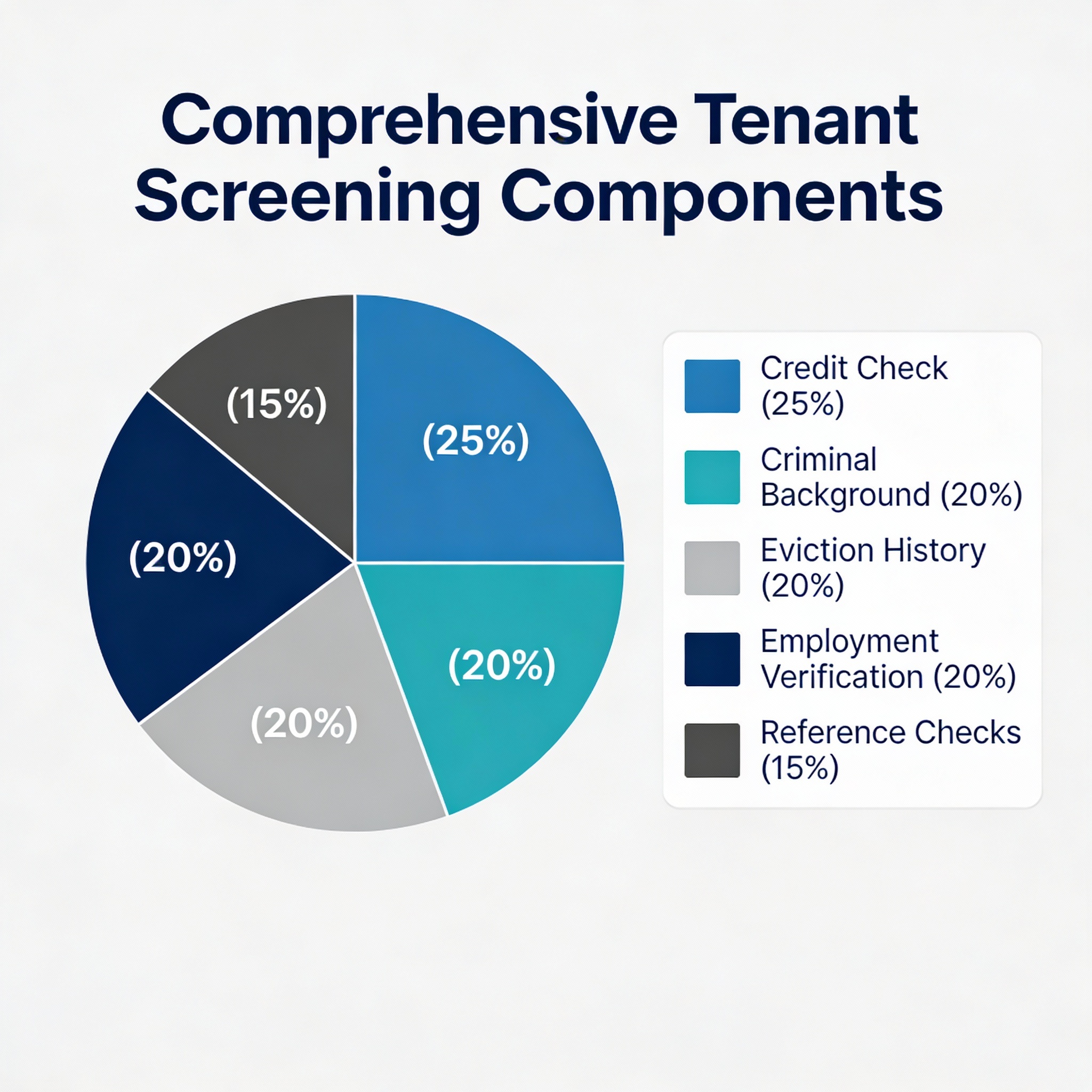
Beyond financial protection, reference checks help landlords comply with Fair Housing Act requirements by applying consistent, objective screening criteria to all applicants. Moreover, they protect both parties: landlords gain confidence in tenant selection, while tenants avoid leases they cannot realistically afford.
Understanding the Three Types of Reference Checks
Employment and Income Verification
Employment verification confirms job stability and income capacity—two fundamental predictors of consistent rent payment. Landlords should verify that applicants meet the industry-standard 3x rent rule, which requires gross monthly income to be at least 3 times the monthly rent. For example, if rent is $1,500 per month, the tenant should earn at least $4,500 monthly before taxes.
To verify employment effectively, landlords should:
Request recent pay stubs (at least two consecutive months)
Contact employers directly to confirm job title, hire date, and salary
Review W-2 forms or tax returns for self-employed applicants
Ask about anticipated income changes in the next 12 months
Direct employer contact remains the gold standard for verification. However, landlords should clearly identify themselves, explain the purpose of routine verification, and request information professionally. Many HR departments have established protocols for these inquiries and may require written authorization from the applicant.
Previous Landlord
Contacting previous landlords provides invaluable insights into tenant behavior, payment reliability, and property care. Importantly, landlords should contact at least two previous landlords when possible—and crucially, not just the current landlord. Current landlords may provide overly positive references to encourage a problematic tenant to move.
Effective landlord reference checks should verify:
Rental dates and monthly rent amount
On-time payment history and any late payments
Property condition and maintenance issues beyond normal wear
Lease compliance and notice to vacate procedures
Whether the landlord would rent to the applicant again
Landlords should ask open-ended questions that encourage detailed responses rather than simple yes/no answers. For instance, instead of asking “Did they pay rent on time?” ask “Can you describe their payment history throughout the tenancy?”
Personal and Character
Personal references provide additional context about an applicant’s character, reliability, and interpersonal behavior. While these references are often more subjective and potentially biased, they can reveal patterns of responsibility and trustworthiness that complement other screening components.
When contacting personal references, landlords should:
Establish how the reference knows the applicant and for how long
Ask open-ended questions about character and reliability
Be mindful of overly glowing reviews that may not present a complete picture
Watch for references with matching last names or contact information, as the applicant
Detecting Fake References: Red Flags and Verification Techniques
Rental application fraud has become increasingly common, with applicants sometimes providing fabricated landlord personas, friends or family posing as landlords, or even hiring reference-for-hire services. Landlords must actively verify the legitimacy of references to avoid costly mistakes.
Common red flags include:
Vague phone greetings without professional property management identification
Overly enthusiastic praise with no specific details
Inability to answer property-specific questions (unit number, lease dates, rent amount)
Shared last names or contact information between the applicant and the reference
No online presence for the landlord or property management company
Personal email addresses (Gmail, Yahoo) instead of business domains
To verify reference authenticity, landlords should:
Cross-check property ownership through county tax records or property databases
Conduct reverse phone lookups to confirm contact information
Ask detailed questions only a genuine landlord would know
Research the property management company online for legitimacy
Request proof of previous rent payments, such as bank statements or transfer receipts
How SmartScreen Enhances Reference Check Accuracy
SmartScreen distinguishes itself through comprehensive verification processes, advanced technology, and 22 years of tenant screening expertise. The service leverages partnerships with industry leaders such as TransUnion to provide landlords with accurate, timely data on credit history, criminal background, eviction records, and reference verification.
Key advantages of SmartScreen’s approach include:
Advanced Technology Integration: SmartScreen uses TransUnion’s ResidentScore, a proprietary tenant-screening system that predicts evictions 15% better than traditional credit scores and identifies 19% more payment skips. This rental-specific scoring provides landlords with more accurate risk assessment than generic credit scores.
Soft Inquiry Credit Checks: Unlike many screening services, SmartScreen uses soft inquiries that do not impact tenant credit scores. This tenant-friendly approach allows applicants to apply to multiple properties without damaging their credit, while landlords still receive comprehensive financial information.
Rapid Report Delivery: SmartScreen delivers comprehensive screening reports within 30 minutes of applicant authorization, enabling landlords to make timely decisions and reduce vacancy periods.
FCRA Compliance: All SmartScreen processes adhere to the Fair Credit Reporting Act (FCRA) standards, helping landlords maintain legal compliance with tenant-screening regulations. This includes proper consent procedures, accurate information handling, and protocols for adverse action notification.
Customizable Screening Packages: Landlords can select services based on property requirements, from basic credit checks to comprehensive packages that include employment verification, eviction history, criminal background checks, and reference checks.
Legal Compliance: FCRA and Fair Housing Requirements
Landlords must navigate federal regulations governing tenant screening to avoid legal liability and ensure fair, consistent processes.
Fair Credit Reporting Act (FCRA) Requirements
The FCRA establishes specific obligations for landlords conducting background checks:
Obtain written consent before requesting consumer reports
Provide adverse action notices when denying applications based on screening results
Ensure maximum possible accuracy of information
Give applicants access to dispute inaccurate information
Maintain reasonable procedures for data accuracy and privacy
Adverse action notices must include the reporting agency’s contact information so applicants can dispute errors. Failure to comply with FCRA requirements can result in fines of up to $1,000 per violation.
Fair Housing Act and HUD Guidance
The Fair Housing Act prohibits discrimination based on protected classes, including race, color, religion, sex, national origin, familial status, and disability. In April 2024, HUD released updated guidance emphasizing fair tenant screening practices:
Transparency: Screening criteria must be in writing, public, and readily available to all applicants
Consistency: Apply the same standards uniformly to every applicant
Relevance: Focus screening on the applicant’s ability to pay rent and comply with lease requirements
Recency: Prioritize recent records over older records when evaluating applicants
Opportunity to Respond: Provide applicants a chance to present mitigating information for negative findings
The National Association of Residential Property Managers (NARPM) emphasizes that income verification and credit history are key components of fair screening, as they help ensure tenants can afford properties and protect property owners’ financial interests.
Best Practices for Conducting Reference Checks
To maximize the effectiveness of reference checks while maintaining legal compliance, landlords should implement these proven strategies:
Establish Written Screening Criteria: Document all screening standards before accepting applications, including minimum qualifications for income, credit, rental history, and references. Written policies protect against discrimination claims and ensure consistency.
Create a Standard Reference Check Form: Develop a template with consistent questions for all applicants. Standardization ensures thoroughness and demonstrates objective evaluation processes.
Contact Multiple References: Reach out to at least two previous landlords, the current employer, and one or two personal references when possible. Multiple verification points reduce the risk of fraudulent information.
Verify Reference Legitimacy First: Before conducting the reference check interview, confirm the referenceis authenticity using property records, reverse phone lookups, and online research.
Ask Open-Ended Questions: Encourage detailed responses that reveal patterns and behaviors rather than yes/no answers. Open-ended questions provide richer insights into tenant reliability.
Document Everything: Keep detailed notes on all reference-check conversations, including dates, times, names, and responses. Documentation provides legal protection and supports decision-making.
Combine with Comprehensive Screening: Reference checks should complement—not replace—credit checks, criminal background checks, eviction history, and income verification. The most effective screening uses multiple data points to create a complete picture.
Sample Reference Check Questions
For Previous Landlords:
Can you confirm that [applicant name] rented from you at [address] from [dates]?
What was the monthly rent amount, and did they consistently pay on time?
Were there any late payments, NSF checks, or payment issues?
How did they maintain the property throughout the tenancy?
Were there any lease violations or complaints from neighbors?
Did they provide proper notice to vacate?
Would you rent to this applicant again? Why or why not?
For Employers:
Can you confirm [applicant name] works for your company?
What is their job title and hire date?
What is their current salary or hourly wage?
Is their position full-time or part-time?
Are there any anticipated changes to their employment status?
For Personal References:
How do you know the applicant, and for how long?
Can you describe their character and reliability?
Have you observed how they handle responsibilities?
Is there anything else I should know about this applicant?
Understanding Screening Timelines
Landlords and applicants often wonder how long the reference check process takes. The timeline varies based on reference availability, verification complexity, and the number of applicants being screened.
Typical timeframes include:
Credit checks: 2-3 hours with automated services
Criminal background checks: Few hours to 2 days, depending on jurisdiction
Employment verification: 1-3 days, depending on HR department responsiveness
Previous landlord references: Few hours to 2 days based on landlord availability
Overall screening process: 24-72 hours for standard screenings, up to 7 days for comprehensive verification
SmartScreen’s technology-enabled platform significantly reduces these timelines, with many reports delivered within 30 minutes of authorization. However, manual reference checks may still require additional time for thorough verification.
Common Red Flags in Tenant Applications
Beyond reference check results, landlords should watch for these warning signs that indicate higher risk:
Incomplete or inconsistent application information
Previous eviction history (the strongest predictor of future eviction)
Unverifiable income or employment details
Frequent moves with short tenancy periods
Refusal to authorize background checks or provide references
Criminal history involving violence, property damage, or drug-related offenses
Multiple collections from previous landlords
Offers to pay large amounts in cash upfront to avoid screening
One or two minor issues may not disqualify an applicant, but patterns of problematic behavior should raise serious concerns. Landlords should evaluate each application individually while maintaining consistent screening standards.
The ROI of Professional Tenant Screening
The financial impact of thorough tenant screening extends far beyond the initial investment. Professional screening services like SmartScreen deliver measurable returns by reducing evictions, lowering vacancy rates, and minimizing property damage.
Financial benefits include:
Preventing 60% of costly tenant-related problems
Avoiding $3,500-$10,000 in eviction costs
Reducing vacancy periods through faster, more confident decision-making
Minimizing property damage and turnover expenses
Ensuring consistent cash flow through reliable rent payments
The cost-benefit analysis is compelling: a $35- $50 screening investment prevents losses exceeding $10,000. Moreover, professional screening protects landlords from legal liability by ensuring compliance with the FCRA and the Fair Housing Act.
Why SmartScreen Stands Out in Tenant Screening
With 22 years in the tenant screening industry, SmartScreen has established itself as a trusted partner for individual landlords, realtors, and property managers. Customer testimonials consistently highlight the service’s reliability, ease of use, and responsive support.
Dawn Parker of Birmingham Realty notes: “SmartScreen tenant screening is cost-effective and so easy to use! It gave me so much more information than I expected on a potential tenant.”
Mandy Campbell of Dorman Real Estate Management adds: “Very professional company and makes our job easier as a property manager! I highly recommend.”
Jim Adamek shares: “SmartScreen helped our clients for years with a very reliable and effective screening process. He is responsive when you have needs or questions.”
These testimonials reflect SmartScreen’s commitment to providing accurate, reliable screening services that foster trust between landlords and tenants. The company’s focus on efficiency, combined with cutting-edge technology such as ResidentScore and soft-inquiry credit checks, enables landlords to quickly and easily integrate screening into their rental management process.
Getting Started with SmartScreen
Landlords can begin using SmartScreen by visiting smartscreen.clearscreening.com to create an account and select customizable screening packages tailored to their specific needs. The registration process is straightforward, and the platform provides extensive support throughout the screening process.
SmartScreen offers flexible payment options, allowing landlords to choose whether to pay for screening services themselves or have the applicant pay. This flexibility accommodates different business models and market conditions while maintaining high screening standards.
Once registered, landlords gain access to comprehensive tenant reports, including credit history, criminal background checks, eviction records, employment verification, and reference-check support. Reports are delivered rapidly, typically within 30 minutes, enabling timely decisions that minimize vacancy periods.
FAQ: Reference Checks for Tenant Screening
What are reference checks, and why are they essential for landlords?
Reference checks validate past rental behavior, employment status, and character by contacting previous landlords, employers, and personal references. They provide firsthand insights into tenant reliability, payment history, and property care—information that credit reports alone cannot reveal. Professional screening prevents 60% of costly tenant problems and helps landlords avoid evictions that cost $3,500-$10,000 on average.
Who should conduct reference checks for tenant screening?
Reference checks can be conducted by landlords, property managers, or professional screening services like SmartScreen. Many landlords choose professional services to ensure consistency, legal compliance, and thorough verification. Professional services also provide protection against fraud and reduce the time burden on landlords.
What information should be verified during reference checks?
Standard reference checks should verify rental history (including payment patterns and property care), employment status and income (confirming the 3x rent rule), previous landlord experiences (from at least two landlords), and character references related to responsibility and reliability. Effective checks also verify the authenticity of references through property records and reverse phone lookups.
What if a tenant refuses to provide references?
Refusal to provide references is a significant red flag. References are a standard component of thorough screening, and legitimate tenants understand this. Landlords should evaluate such refusals carefully and consider whether to proceed with the application. Written screening policies should clearly state that reference provision is required.
How does SmartScreen help with reference checks and verification?
SmartScreen conducts thorough reference checks using advanced databases and rapid verification, providing landlords with comprehensive insights into tenant reliability. The service combines reference verification with credit, criminal background, eviction history, and employment verification to create a complete tenant profile. SmartScreen’s 22 years of experience and partnerships with industry leaders like TransUnion ensure accurate, FCRA-compliant screening.
How long does the reference check process typically take?
Reference check timelines vary based on reference availability and responsiveness. Employment verification typically takes 1-3 days, while previous landlord checks can take 2 -3 days. Complete tenant screening, including all reference checks, typically takes 24-72 hours but can extend to one week for comprehensive verification. SmartScreen’s technology significantly reduces these timelines for automated screening components.
Can landlords verify references without professional screening services?
Yes, landlords can conduct reference checks independently by contacting previous landlords, employers, and personal references directly. However, this approach requires significant time investment, carries a higher fraud risk without verification tools, and demands careful documentation for legal compliance. Professional services such as SmartScreen offer standardized processes, fraud-detection capabilities, and FCRA compliance, which many individual landlords find valuable.
What makes ResidentScore different from a regular credit score?
ResidentScore is TransUnion’s proprietary scoring system for tenant screening, unlike generic credit scores used for loan decisions. ResidentScore predicts evictions 15% better than traditional credit scores, identifies 19% more payment skips, and can score more applicants with minimal credit files. It focuses specifically on rental performance indicators rather than general creditworthiness.
TL;DR: Key Takeaways for Landlords
Reference checks are essential to comprehensive tenant screening, helping landlords identify reliable tenants and avoid costly issues. Professional tenant screening prevents 60% of tenant-related issues and provides a 100:1 return on investment compared to eviction costs. Effective reference checks verify employment and income (ensuring the 3x rent rule), contact multiple previous landlords (not just the current one), and verify fake references through property records.
SmartScreen offers landlords 22 years of tenant screening expertise, combining reference checks with credit reports, criminal background checks, eviction history, and employment verification. The service uses TransUnion’s ResidentScore for superior risk prediction, conducts soft inquiries that don’t impact tenant credit scores, and delivers comprehensive reports within 30 minutes. Legal compliance requires written consent before screening, consistent application of criteria to all applicants, and adverse action notices for denials.
By partnering with SmartScreen and implementing thorough reference-check procedures, landlords can confidently select high-quality tenants, maintain consistent cash flow, protect their properties, and build successful long-term rental relationships.