


Understanding Short-Term Lease Agreements: Definitions and Legal Framework
Short-term lease agreements typically last less than six months, distinguishing them from standard annual leases. Most range from 1 to 30 days, depending on local regulations and landlord preferences. However, regulatory definitions vary significantly by jurisdiction—for example, some cities define short-term rentals as accommodations for fewer than 30 consecutive days, while others use different thresholds.
Current Market Dynamics:
The short-term rental market has experienced significant evolution, with 2026 presenting improved investment conditions. According to AirDNA’s 2026 Outlook Report:
Supply growth moderating to 4.6%, well below the 20% peak in 2021-2022
Average daily rates (ADR) expected to improve by 15% in 2026
Occupancy is experiencing a minor adjustment of -1% as markets balance supply and demand
The 2026 FIFA World Cup is creating significant demand catalysts in host cities
Legal Compliance Alert:
Many jurisdictions have implemented strict regulations on short-term rentals. Italy is ending tax breaks on short-term rental income, while French cities are banning most short-term rentals. Landlords must research local laws before implementing short-term lease strategies.
Critical Tenant Screening Requirements for Short-Term Leases
Comprehensive FCRA-Compliant Screening Protocols
Professional tenant screening remains essential for short-term leases, with industry experts recommending comprehensive background verification regardless of lease duration. Leading property managers utilize platforms like SmartScreen and TransUnion SmartMove to ensure thorough, legally compliant evaluations that protect against fraud and property damage.
Industry Statistics:
With 93.3% of property owners experiencing rental application fraud and 84.3% of landlords seeing falsified pay stubs or employment documentation, comprehensive screening has become non-negotiable for risk management.
Essential Screening Components for Short-Term Tenants
Professional screening for short-term leases must include multiple verification layers:
Criminal Background Checks: Verification against millions of criminal records and sex offender registries to identify potential safety risks
Identity Verification: Advanced biometric analysis combining selfie verification with government-issued ID validation to prevent fraud
Financial History Analysis: Credit checks and income verification to ensure payment capability, even for short stays
Rental History Review: Previous landlord references and eviction record searches to assess tenant behavior
Platform Review Analysis: Examination of guest ratings and reviews from Airbnb, Vrbo, and similar platforms
Technology Integration:
Modern screening platforms incorporate AI-powered fraud detection, with services like Authenticate offering tampered ID detection, facial recognition, and robust background checks tailored to STR owners.
Strategic Advantages and Challenges of Short-Term Leases
Financial Benefits and Revenue Optimization
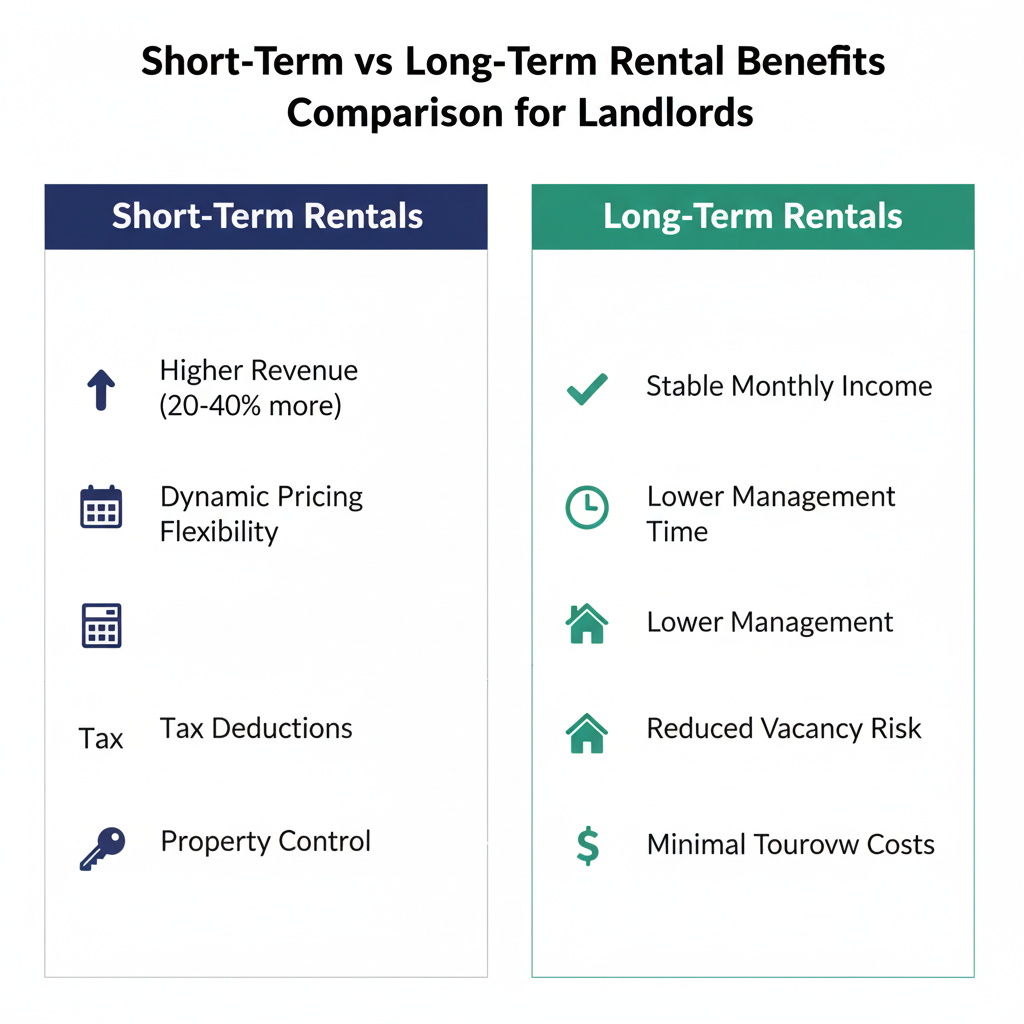
Short-term leases offer significant financial advantages for strategic landlords:
Higher Revenue Potential: Well-managed short-term rentals can generate 20-40% higher revenue than traditional leases in desirable markets
Dynamic Pricing Flexibility: Unlike annual leases with fixed rates, short-term agreements allow frequent rate adjustments based on seasonal demand and local events
Improved 2026 Outlook: The STR Premium (comparing STR earnings against investment costs) has reached its highest level since 2022
Tax Advantages: Short-term rental operators may qualify for enhanced deductions under the Big Beautiful Bill tax incentives expected in 2026
Market Performance Data:
Top markets for 2026 include Fairbanks, Alaska (6.52% ROI, $4,680 monthly income), and Crescent City, California (4.94% ROI, $6,430 monthly income).
Operational Challenges and Solutions
However, short-term leases present unique operational challenges:
Increased Administrative Workload: Booking windows have shortened from 34 days in 2022 to 29 days in 2026 for peak season
Higher Maintenance Demands: Frequent turnover necessitates regular cleaning and property preparation between guests
Stricter Regulations: Limited long-term housing supply is pushing local governments to restrict short-term rentals further
Insurance Complexity: Short-term rentals often require specialized coverage beyond standard rental policies
Professional Solution:
Many successful landlords utilize property management companies or automated systems like iGMS and Hostfully to handle increased workload while maintaining quality standards.
Best Practices for Short-Term Lease Implementation
Comprehensive Lease Documentation
Effective short-term lease agreements must include specific provisions:
Essential Lease Components:
Property address and detailed unit description with maximum occupancy
Specific rental period with check-in/check-out procedures and times
Security deposit requirements and refund conditions
House rules, including noise restrictions, pet policies, and smoking regulations
Guest registration and identification requirements
Cancellation policies and fee structures
Lead-Based Paint Disclosure Form for structures built before 1978
Technology Integration and Management Systems
Successful short-term rental operations leverage integrated technology platforms:
Property Management Software: Comprehensive systems combining booking management, guest communication, and financial tracking
Digital Screening Platforms: Automated tenant verification through services like SmartScreen for consistent, compliant screening processes
Smart Lock Systems: Time-bound, unique access codes that automatically expire after checkout
Electronic Signature Systems: Legally binding digital agreements that expedite the leasing process
Legal Compliance and Regulatory Navigation
Local Regulation Analysis
Short-term rental regulations vary dramatically by jurisdiction, requiring careful legal analysis:
Common Regulatory Requirements:
Business licensing and permit requirements
Zoning compliance and residential use restrictions
Health and safety inspections and certifications
Occupancy limits and fire code regulations
Tax registration and collection obligations
Guest registration and reporting mandates
Recent Legislative Developments:
US cities are increasing enforcement ahead of the 2026 World Cup and the 2028 Olympics, with some jurisdictions requiring owner-occupancy or limiting rental days per year.
Fair Housing Compliance
Short-term rentals must comply with Fair Housing laws, requiring consistent application of screening criteria and transparent policies outlined in listings.
Tenant Screening Excellence for Short-Term Success
SmartScreen Integration for Short-Term Rentals
Professional screening through SmartScreen’s comprehensive platform provides critical protection for short-term rental operators:
ResidentScore® Technology: Proprietary algorithms predicting eviction risk 15% more accurately than traditional credit scores
Same-Day Reporting: Rapid turnaround enabling fast booking confirmations while maintaining thorough standards
Identity Verification: Advanced fraud detection preventing the 93.3% of rental applications containing false information
Criminal Background Analysis: Comprehensive searches protecting property and neighboring residents from potential safety risks
Advanced Screening Strategies
Leading short-term rental operators implement multi-layered screening approaches:
Platform Review Integration: Analysis of guest ratings and reviews from multiple booking platforms
Behavioral Risk Indicators: Flagging high-risk patterns like local residents booking 1-night stays (party indicator)
Zero-Trust Rule: Never accepting bookings at face value—validating every guest identity through biometric analysis
Digital Contract Enforcement: Requiring signed rental agreements outside OTA platforms for legal protection
Frequently Asked Questions
What defines a short-term lease agreement?
Short-term lease agreements typically last between 1-30 days, though legal definitions vary by jurisdiction. Some cities use different thresholds for regulatory purposes.
Is tenant screening necessary for short-term rentals?
Absolutely essential. Professional screening through platforms like SmartScreen protects against 93.3% of applications containing fraudulent information and helps prevent property damage risks.
What screening components are critical for short-term tenants?
Essential screening includes criminal background checks, biometric identity verification, credit analysis, rental history review, and platform rating analysis. Professional services ensure FCRA compliance.
How do short-term rentals compare financially to long-term leases?
Short-term rentals can generate 20-40% higher revenue, but require additional expenses for cleaning, utilities, and management. The 2026 STR Premium has reached its highest level since 2022.
What legal compliance issues affect short-term rentals?
Compliance requirements include local licensing, zoning restrictions, Fair Housing laws, fire codes, occupancy limits, and tax obligations. Many jurisdictions have implemented strict limitations.
Should I use professional property management for short-term rentals?
Professional management can be beneficial for handling increased workload, especially with booking windows shortening to 29 days in peak season. Many operators employ hybrid approaches.
What insurance coverage do short-term rentals require?
Short-term rentals typically need specialized insurance beyond standard rental property policies, including liability protection, property damage coverage, and loss of income protection.
How can I maximize short-term rental revenue in 2026?
Revenue optimization strategies include dynamic pricing based on demand (ADR expected to improve 15% in 2026), targeting high-ROI markets, and leveraging events like the 2026 FIFA World Cup.
TL;DR: Essential Short-Term Lease Success Framework
Professional screening is mandatory: Comprehensive tenant verification through platforms like SmartScreen prevents 93.3% of fraudulent applications and protects against property damage.
2026 presents improved conditions: Supply growth moderating to 4.6%, ADR improving 15%, and the STR Premium reaching its highest level since 2022.
Legal compliance varies significantly: Short-term rental regulations differ substantially by jurisdiction, with stricter enforcement expected ahead of major events.
Revenue potential exceeds traditional leases: Well-managed short-term rentals generate 20-40% higher revenue but require additional operational expenses.
Technology integration drives success: Modern operations require sophisticated platforms for booking management, biometric guest screening, and automated access control.
Professional References: