

TL;DR – Key Takeaways
Tenant screening is essential to mitigate risks such as unpaid rent, property damage, or costly legal disputes.
SmartScreen delivers advanced tenant background checks with unmatched accuracy and speed.
Combining expert advice with robust screening tools helps landlords protect their properties, income, and peace of mind.
Why Tenant Screening Is So Important for Landlords
Tenant screening isn’t just about checking boxes. Rather, it serves as your first line of defense against problems like non-payment, property damage, and legal disputes. According to the National Association of Realtors, thoroughly-screened tenants are 40% less likely to default on rent or cause significant property damage.
Expert Insight
Sarah Michaels, a property manager with over 15 years of experience, explains:
“Tenant screening is your chance to truly understand who you’re handing the keys to. Skip the critical steps, and you could be facing months of financial stress or legal trouble.”
By screening every applicant thoroughly, landlords not only protect their own investment but also foster safer, more stable communities for all tenants.
What Are the Risks of Not Screening Tenants?
Failing to screen tenants properly exposes landlords to serious risks, including:
Unpaid rent: Leasing to applicants with a documented history of late or missed payments.
Legal disputes: Problematic tenants often trigger expensive eviction proceedings and court costs.
Property damage: Tenants with poor rental histories may neglect upkeep or cause intentional harm.
For instance, a 2022 National Multifamily Housing Council (NMHC) survey found that 60% of landlords who skipped comprehensive screening reported payment issues, property damage, or eviction proceedings within just six months of move-in.
What Is SmartScreen and How Does It Work?
SmartScreen is a tenant screening service designed specifically for landlords who need fast, accurate background checks. The platform seamlessly integrates credit data, criminal reports, and eviction history to empower informed leasing decisions.
What Sets SmartScreen Apart
Expert-backed data: SmartScreen uses industry-leading analytics to compile credit, rental, and criminal information from multiple trusted sources.
Instant reports: Landlords can access credit, criminal, and eviction data within minutes, not days.
Customizable packages: Whether you manage one property or a large portfolio, SmartScreen scales checks to fit your specific needs.
Expert Commentary
Mark Johnson, an independent landlord and National REIA member, shares:
“SmartScreen is fast, thorough, and has saved me from approving several high-risk tenants. The detailed reports give me confidence in every leasing decision.”
What’s Included in a SmartScreen Background Check?
Credit Check
A credit check reveals an applicant’s credit score, payment history, bankruptcies, and other financial red flags. Credit reports from major bureaus like Experian and TransUnion help assess whether the applicant handles financial obligations responsibly.
Criminal History
Criminal background checks protect your property and other tenants by cross-referencing national databases. However, it’s crucial to comply with fair housing laws when evaluating criminal history to avoid discriminatory practices.
Eviction History
Detailed eviction records flag high-risk applicants who have previously broken leases, skipped rent payments, or been formally evicted. Multiple evictions often signal chronic problems.
Rental History
Rental history verification ensures that applicants have consistently paid rent on time and followed lease terms. SmartScreen contacts previous landlords directly for accuracy, giving you firsthand insight into the applicant’s track record.
Employment Verification
Stable income is the foundation of reliable rent payment. SmartScreen verifies employment status and income levels to confirm that applicants can comfortably afford your property.
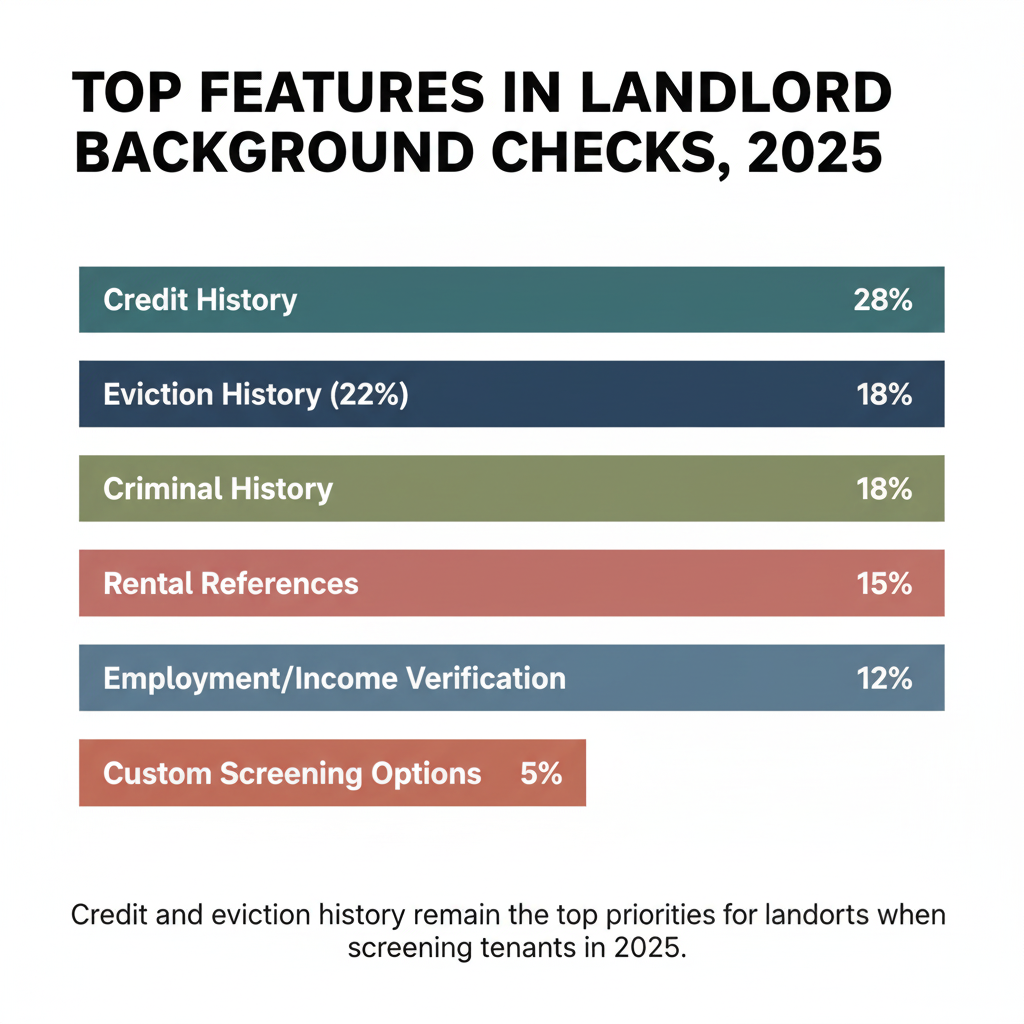
Caption: Credit and eviction history remain the top priorities for landlords when screening tenants in 2025.
Using SmartScreen Report Data Effectively
Credit and Payment History
When reviewing credit reports, look beyond the three-digit score. Instead, focus on late payments, outstanding debt, and bankruptcies. Keep in mind that one old medical collection is vastly different from a pattern of unpaid rent across multiple addresses.
Eviction History
Multiple evictions are a major red flag. They typically signal chronic non-payment, lease violations, or tenant conflicts that could easily repeat at your property.
Employment Verification
Favor applicants with stable, documented income and employment histories spanning at least six months to a year. Recent job-hopping or income inconsistencies deserve closer scrutiny.
Pro Tip: Don’t rely solely on credit scores. Use a holistic approach by combining credit reports, criminal checks, eviction records, and rental history for the most accurate risk assessment.
Legal Considerations for Tenant Screening
Fair Credit Reporting Act (FCRA)
Landlords must follow the Fair Credit Reporting Act, which governs how consumer data is collected and used. For example, when denying an application based on a screening report, you must provide an adverse action notice that explains the decision and gives the applicant a chance to dispute inaccuracies.
Fair Housing Act
Never discriminate based on race, religion, sex, national origin, disability, or familial status. Apply the same screening policy consistently to all applicants to ensure compliance with HUD’s Fair Housing guidelines.
Expert Note
Attorney Emily Davis emphasizes:
“Transparency and fairness are non-negotiable. Violating the Fair Housing Act or FCRA doesn’t just bring steep penalties—it can also destroy your reputation and trigger costly lawsuits.”
Fair Housing and Compliance Tips
To stay compliant and avoid discrimination claims:
Follow Fair Housing rules strictly: Never ask about or make decisions based on protected characteristics.
Apply criteria equally: Use identical screening standards for every applicant, regardless of background.
Document every decision: Keep thorough records of screening reports, interview notes, and the rationale behind each approval or denial.
How to Choose the Right Tenant Screening Service
When comparing tenant screening services, prioritize these features:
Comprehensive reports: Look for platforms that bundle credit, criminal, eviction, and rental history data into a single package.
Fast turnaround: Reports delivered within 24–48 hours help you make timely decisions in competitive rental markets.
FCRA compliance: Ensure the service follows federal regulations and provides adverse action support to keep you legally protected.
Customizable packages: Choose services that let you scale checks based on your property portfolio, whether you own one duplex or manage dozens of units.
Leading comparison sites like Avail, Stessa, and Baselane consistently rank SmartScreen among the top choices for landlords.
Real-World Example: How SmartScreen Saved a Landlord Thousands
Lisa, a small landlord in Texas, nearly approved an applicant who interviewed beautifully and had a polished appearance. Before signing the lease, however, she decided to run a SmartScreen background check. The report revealed:
Three prior evictions across different states over the past five years.
Multiple late payments, collections, and a recent bankruptcy.
Employment verification didn’t match the stated income on the application.
By catching these red flags early, Lisa avoided what could have been a $15,000+ loss in unpaid rent, legal fees, and property damage. Stories like hers underscore why comprehensive screening isn’t optional—it’s essential insurance for any rental business.
Step-by-Step: How to Screen Tenants Using SmartScreen
Collect a rental application: Require every applicant to complete a standardized form that includes personal information, employment details, rental history, and consent to background checks.
Order a SmartScreen report: Log in to your SmartScreen account and select the appropriate screening package.
Review the report carefully: Analyze credit history, criminal records, eviction history, and rental references using the holistic approach outlined above.
Verify employment and income: Cross-check the applicant’s stated income against pay stubs or employer verification.
Make an informed decision: Compare the data to your written screening criteria and document your rationale for approval or denial.
Provide adverse action notice if needed: If you deny an application based on the report, follow FCRA requirements by notifying the applicant and explaining their rights.
Conclusion: Protect Your Investment With Smart Screening
Tenant screening is more than a formality—it’s your best investment in peace of mind and asset protection. With SmartScreen, you gain access to fast, expert-backed background checks that dramatically reduce risk with every lease. By staying compliant with FCRA and Fair Housing laws while using a holistic screening approach, you’ll consistently attract and retain better tenants while protecting your rental income and property.
Frequently Asked Questions
What is the best background check for landlords?
SmartScreen delivers the most thorough and customizable tenant screening available, combining credit, criminal, eviction, and rental history into one comprehensive report.
How can SmartScreen benefit landlords?
SmartScreen makes tenant decisions easier, faster, and far less risky by providing verified data from multiple trusted sources—usually within 24 hours or less.
What information is in a SmartScreen report?
SmartScreen reports include credit history, criminal background, eviction records, rental references, and employment/income verification data.
How fast are SmartScreen results?
Reports are typically delivered within 24 hours, helping you fill vacancies quickly without sacrificing thoroughness.
Is SmartScreen compliant with privacy laws?
Yes—SmartScreen rigorously follows FCRA, the Fair Housing Act, and all confidentiality rules to protect both landlords and tenants.
Can landlords customize their screening packages?
Absolutely—SmartScreen offers tailored report packages for unique rental needs, from single-family homes to large multi-unit properties.
Author: Sarah Michaels, Property Management Expert & SmartScreen Contributor
References: