


What Are Behavioral Indicators in Tenant Screening?
Behavioral indicators are non-financial signs that a tenant is likely to pay rent on time, respect the property, and adhere to lease terms. Examples include punctuality in payments, clear communication, and cooperation with neighbors. Screening for these behaviors enables landlords to select responsible tenants and minimize the likelihood of conflict, damage, or eviction.
Why Do Behavioral Indicators Matter?
Reliability: Tenants who consistently pay on time demonstrate reliability and respect for agreements.
Property Care: Well-behaved tenants minimize wear and tear, reducing long-term costs.
Community Impact: Positive communication and cooperation support tenant harmony, boosting occupancy rates.
Legal Safety: Behavioral screening complements credit and criminal checks, supporting Fair Housing law and best practices compliance (HUD.gov, Fair Housing).
Key Behavioral Indicators Landlords Should Evaluate
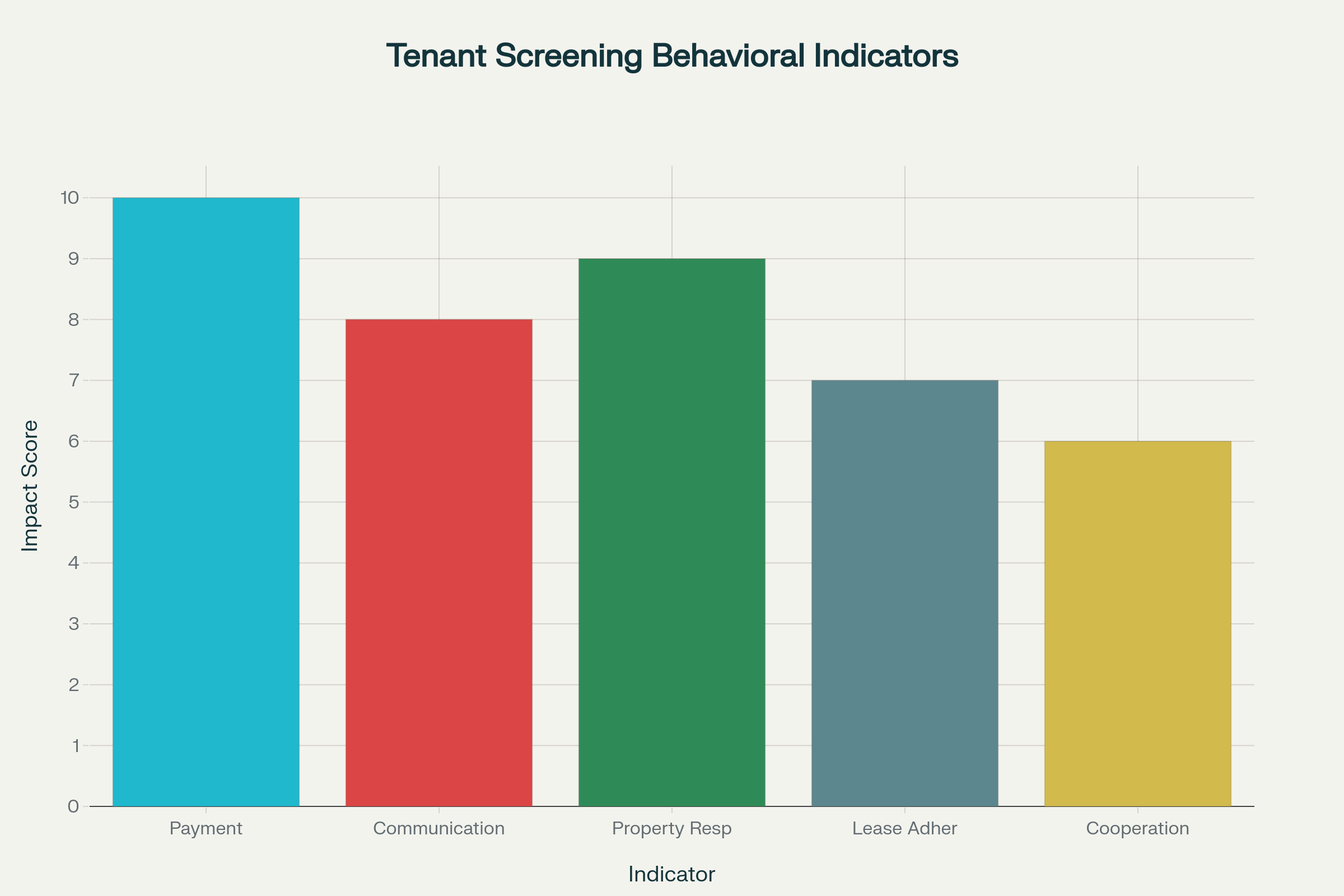
Payment Punctuality: Track previous payment records or references from former landlords (NARPM Payment Standards).
Communication Responsiveness: Observe how quickly and respectfully prospective tenants respond to emails or calls.
Respect for Property: Ask past landlords about cleanliness and maintenance habits.
Lease Adherence: Review history of honoring lease terms (no subletting, consistent rule compliance).
Cooperation with Neighbors: Seek feedback about noise, conflicts, and community harmony.
Real-Life Tenant Screening Scenarios (SmartScreen Highlights)
Example 1: A Houston property manager used SmartScreen to screen applicants. One candidate had excellent financials, but past landlord references cited repeated noise complaints and ignored property rules. The manager selected a more responsible applicant, reducing future disruption.
Example 2: A Detroit rental owner checked SmartScreen’s behavioral report, which flagged inconsistent payment punctuality and incomplete communication regarding maintenance requests—predicting a higher risk of lease violation.
How to Integrate Behavioral Screening in Your Process
Request References from Past Landlords: Ask specific questions about their behavior, not just payment history.
Utilize Behavior-Driven Screening Services: Platforms like SmartScreen enable you to incorporate behavioral scoring into your evaluation.
Document Communication: Track applicant responses during the application process.
Interview Applicants: Use structured questions that probe for honesty, responsibility, and respect for agreements.
Stay Legally Compliant: Always follow Fair Housing and privacy guidelines (Nolo Landlord-Tenant Law).
Red Flags to Watch
Habitual late payments
Unresponsive communication
Lack of care for property (poor landlord reviews)
Frequent or unresolved neighbor complaints
History of lease violations
TL;DR Summary
Behavioral indicators in tenant screening—such as payment punctuality, communication, adherence to rules, and neighbor cooperation—deliver deeper insight for landlords. SmartScreen’s process and reference-based checks enhance selection, allowing you to protect property value and maintain tenant harmony.
FAQ
What are behavioral indicators in tenant screening?
Signs of a tenant’s reliability, respect, and cooperation are evaluated beyond financial data.
How can I check for behavioral indicators?
Use thorough references, interview questions, and SmartScreen behavior scoring.
Why do behavioral indicators matter?
They reduce issues with late payments, property damage, and community conflict.
Is behavioral screening legal?
Yes—if conducted equally for all applicants and in accordance with Fair Housing law.
What is the best service for behavioral tenant screening?
SmartScreen, NARPM, and reputable property management platforms.
Conclusion
Integrating behavioral indicators into tenant screening is crucial for every landlord seeking peace of mind, reduced risk, and an enhanced rental experience. By referencing top industry standards, asking smart questions, and using modern behavioral scoring tools, you can select tenants who bring reliability—and harmony—to your rental property.
Author:
Alex Hernandez, Property Management Consultant, Partner at SmartScreen
Sources: